

Affected communities in the IJmond region
Why it matters
TSN’s IJmuiden site is located close to residential areas in the municipalities of Velsen, Beverwijk and Heemskerk, making impacts on neighbouring communities a material topic.
Key objectives
The double materiality assessment identified impacts related to community concerns over noise, dust and odour, and a potential positive impact related to green job creation.
During the reporting year, TSN implemented concrete noise‑reduction measures, including the installation of three silencers at the steel plant, upgrades to safety alarms and train
alarm bells, restrictions on nighttime activities, and the placement of sound meters on cranes involved in scrap handling1.
TSN also continued to operate and use formal grievance channels, including a community information desk in Wijk aan Zee, a hotline, an online complaint form, and the handling of complaints submitted via the environmental regulator.
Engagement with affected communities continued through regular meetings with local authorities, participation in neighbourhood forums, site visits, and monthly sentiment surveys in Wijk aan Zee.
In addition, TSN signed a Joint Letter of Intent with the Dutch State and continued work on the Green Steel Project, which frames further mitigating odour hindrance and noise reductions relevant to the IJmond region.
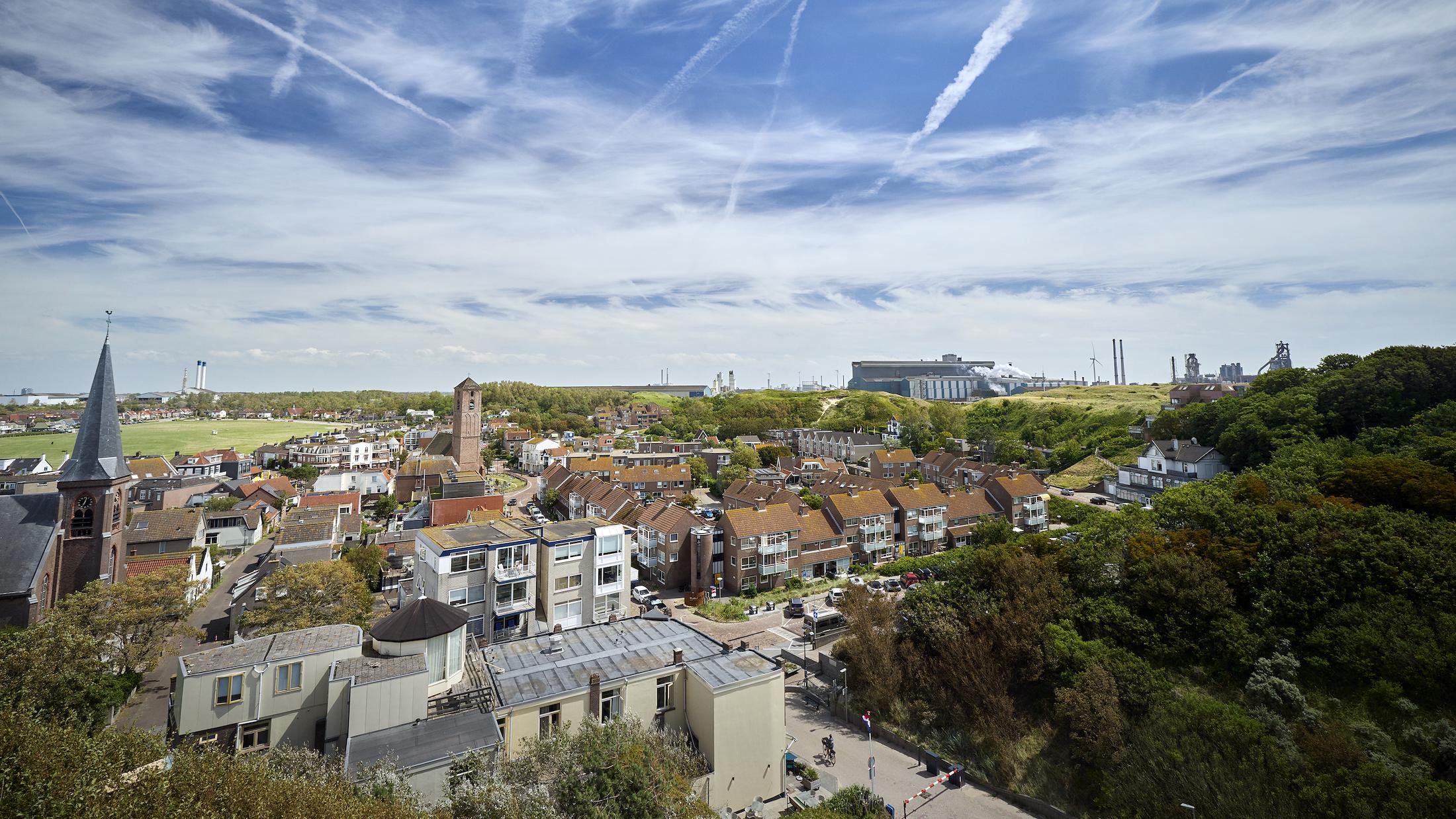
Table. Summary of IROs, policies, key actions, metrics and targets related to affected communities in the IJmond region
|
Impacts, risks and opportunities |
Category |
Key Policies |
Key Actions |
Key Metrics |
Key Targets |
|---|---|---|---|---|---|
|
Affected communities in the IJmond region: Industrial activities at TSN’s IJmuiden site involve noise, dust and odor, which are factors considered in relation to the health and wellbeing of surrounding communities in the IJmond region. |
Actual, Negative impact |
Human Rights Policy |
Further information on dust and odour mitigation efforts is provided in the Pollution chapter. |
TSN will assess the option developing entity-specific metrics. |
No targets have been set for the current reporting period. |
|
Green job creation: TSN is potentially directly and indirectly creating a significant number of jobs in the emerging green energy industries, while fostering innovation through research and development partnerships with universities, startups, and other stakeholders. |
Potential, positive impact |
TSN will assess the potential positive impact to develop a management approach |
|||
The TSN IJmuiden site has been in operation for more than a century and is located in the municipalities of Velsen, Beverwijk and Heemskerk. All these municipalities include residential areas that are adjacent to or in close proximity of the IJmuiden site of TSN, such as Velsen-Noord (part of Velsen municipality) and Wijk aan Zee (part of Beverwijk municipality). We will refer to the residents of these areas as ‘our neighbours’ or ‘neighbouring communities’. TSN’s IJmond site employs approximately 9200 people in the reporting year, giving us a significant socio-economic role as one of the largest employers in the region. At the same time, we recognise that our operations generate emissions — including dust, noise and odour — that have been an ongoing source of grievance for our neighbours. In recent years, TSN has been subject to heightened scrutiny regarding emissions originating from the IJmuiden site. This includes the Frisse Wind legal proceedings, which are described in the Litigation section of the Annual Report. Our neighbours expect us to reduce these impacts, and we acknowledge concerns expressed by residents, municipal and national government, the media and non‑ profit organisations.
Local communities may expect TSN to take appropriate steps to address concerns. Alongside open and respectful engagement with our neighbours, we use complaints as an important additional source of insight to ensure concerns are understood and translated into improvement actions.
How we deal with this is reflected in the measures that TSN has already established and supports, including the Joint Letter of Intent (JLoI), which reaffirms our dedication to lowering emissions, addressing health concerns, and improving transparency on dust, noise, and odour. Fundamentally, TSN’s Green Steel Project, aims to substantially reduce dust, odour, noise, NOx and CO₂ emissions, protect local biodiversity, directly supporting the community’s call for a better living environment. Further information on the Green Steel Project is provided in the Climate change chapter.
Impact, risk and opportunity management
Affected communities in the IJmond region policies
TSN’s approach to affected communities is set by a group‑wide ethics and sustainability framework comprising: the TSN Code of Conduct and TSN’s Pollution Control Policy. This framework will be supported by integration of TSN’s Human Rights policy. Policies state our commitments to engage stakeholders and to respect human rights across operations and the value chain.
Human Rights policy
TSN is currently developing a Human Rights Policy, which sets out its commitment to respect human rights across our sites, supply chain, local communities and broader value chain, in line with the UN’s Guiding Principles, relevant ILO conventions and applicable laws. The policy recognises that human rights impacts may arise in communities connected to TSN’s activities and informs expectations for TSN’s own operations, as well as for its supply chain and broader value chain. Further information on the responsible value chain approach is provided in the Responsible value chain chapter.
TSN’s Human Rights Policy aims to apply to all TSN sites and to individuals and communities connected to TSN’s activities, including the IJmond region. The policy explicitly recognises concerns raised in the IJmond region and states a commitment to addressing such concerns transparently and responsibly.
In setting the policy, TSN recognises the importance of engaging with affected stakeholders, including communities, to understand concerns and manage impacts related to its activities. TSN also ensures that stakeholder insights inform human rights risk assessments and follow-up actions, and specifically consider concerns raised by communities in operational locations, including the IJmond region.
Steelmaking is an energy-intensive activity that inherently results in emissions to air, water and soil which causes concerns over the health, wellbeing and living environment in communities surrounding TSN’s operations, particularly in the IJmond region. TSN recognises pollution as a key issue for affected communities and requires robust prevention, control and response measures. Further information on pollution-related impacts and risks and mitigation efforts is provided in the Pollution chapter.
Engagement with affected communities, existence of channels for affected communities to raise concerns or needs and approaches to remedy
During 2025/26, TSN continued to engage proactively and transparently with affected communities.
TSN maintains structured engagement processes with local residents, authorities, experts and civil society organisations through formal consultation mechanisms embedded in TSN’s stakeholder engagement framework. Communities in the IJmond region express their concerns around health, and TSN accepts the reality of these concerns. We use a diverse set of community-oriented engagement channels, including:
-
Regular meetings with local authorities, offering recurring dialogue with the mayors, aldermen, and council members to discuss environmental and climate-related developments
-
Participation in consultations with the Dorpsraad Wijk aan Zee (Village Council), providing a direct interface with representatives of the Wijk aan Zee community
-
Consultations with the Burentafel (“Neighbour Table”), held at least quarterly, enabling structured discussions with neighbourhood councils from the broader IJmond region
-
Monthly “Bewonerspanel Wijk aan Zee” sentiment survey, gathering monthly insights into community perceptions, particularly regarding nuisance
-
Community information desk in Wijk aan Zee, open three days a week for walk-in questions and direct dialogue with residents
-
Site visit tours for our neighbours (Burentours)
TSN operates a formal multi-channel grievance mechanism designed to receive, register, investigate and respond to concerns about the various sources of nuisance from the IJmuiden site. This mechanism is managed by members of our HSSE Front Office, who have direct relationships with Operational Management who have oversight over the parts of the steel plant that may be causing impacts. TSN’s primary grievance channels include:
-
Online complaint form on the TSN website, where residents can submit dust, odour or noise complaints directly to TSN.
-
Telephone hotline, which connects residents directly to the HSSE Front Office for incident reporting.
-
Walk‑in community information office in Wijk aan Zee, open three days a week, allowing residents to report grievances in person and receive information.
-
Complaints submitted via the environmental regulator (OD NZKG) are treated as formal grievances.
All complaints are investigated promptly using operational and environmental measurement tools to identify sources accurately. Investigation methods include dust sampling with laboratory analysis, use of e-nose networks for odour (time/location matched to wind and sensor data), and correlation with operational logs. We notify OD NZKG of unusual incidents within 15 minutes, as required by permit conditions.
These processes allow TSN to reflect community complaints in operational and transition-related decisions. Escalation pathways between the HSSE front office, operations management teams and leadership ensure that recurring concern patterns feed directly into maintenance planning, operational conditions and priority setting. Some grievance-driven changes that we have implemented are microphones to warn crane drivers of the sound and we do not handle scrap material at night to prevent disturbance.
TSN’s Green Steel Project, also reflects community expectations as the transition to cleaner steelmaking is expected to substantially reduce dust, noise, odour and emissions for the IJmond region. You can read more in detail about the Green Steel Project’s pollution-related measures in the Pollution chapter.
Our neighbours expect the above-mentioned engagement channels to be accessible, predictable and responsive, and TSN accepts responsibility for ensuring their effectiveness. In an independent assessment, TSN’s community grievance mechanisms were evaluated against the UN Guiding Principles’ effectiveness criteria. This review included interviews with local community members, users of the mechanism, local organisations, local authorities, and officials across the IJmond.
Some highlighted areas of improvement are:
-
Trust in TSN’s grievance process is uneven across the community, partly driven by a perception that outcomes are not always visible and understood,
-
Odour and noise complaints are submitted anonymously through the Environmental Agency, often without sufficient location-specific information to enable TSN to investigate effectively,
-
Internal tracking of grievance outcomes and communication of actions can be made more consistent.
Key insights from this study directly shape our mitigation approach for the coming year and have guided our actions towards concerns mitigation, which are further elaborated on in the next section about Actions. As part of our response, TSN is planning to make its complaints process clearer and easier to follow and improve how it checks the effectiveness of its information desk, hotline and online reporting channels.
TSN acknowledges responsibility for remediating adverse impacts where our operations have caused or contributed to them. TSN’s remedial actions are integrated into operational cycles and may include enhanced monitoring, operational adjustments or technical interventions, followed by transparent communication with affected individuals.
TSN encourages residents to report disturbances and remains confident in its ability to address these impacts while continuing its transition to cleaner steelmaking.
Affected communities in the IJmond region actions
TSN’s material impact on the surrounding community is rooted in concerns related to noise, dust and odour. In response, TSN seeks to reduce these concerns at the source while ensuring open and consistent communication with the community. Recognising that our neighbours expect decisive action on environmental and health-related concerns, TSN accepts responsibility for remediating adverse impacts where our operations have contributed to them. Our preventive measures are integral to TSN’s long-term strategy, supporting our transition towards lower CO₂ emissions, reduced pollution and increased circularity.
Table. Key current and future actions related to affected communities in the IJmond region
|
Key actions |
Expected outcome |
Scope and timeframe |
|---|---|---|
|
Installation of three silencers at steel plant |
Reducing peak noise |
BOS Plant, IJmuiden site |
|
Upgrades to safety alarms and train alarm bells |
Reducing peak noise |
Raw materials logistics and railway crossings, IJmuiden site |
|
Noise reduced DRP-EAF design (replacing BF7 and CGP2) |
Reducing peak noise |
IJmuiden site Closure Coke and Gas Plant Closure Blast Furnace Part of Green Steel Project Phase 1 |
|
Installation of noise-monitoring systems |
Identify and reduce sources of peak, low frequency, impulse and tonal noise |
Critical locations around IJmuiden site (on and offsite) Part of Green Steel Project Phase 1 |
|
Construction of a sound enclosure |
Targeted reduction of peak noise from scrapyard |
Scrapyard 3 (SOP3), IJmuiden Part of Green Steel Project Phase 1 |
|
Reduction in nighttime activities |
Lower noise exposure during sensitive nighttime periods |
Critical locations around IJmuiden site (on and offsite) Ongoing |
Key actions include engagement with affected communities around the IJmond region to raise awareness, gather feedback and involve residents in the Green Steel Project, an initiative which will lead to a decrease in emissions and local concerns related to dust, noise and odour. We also maintain a formal complaints procedure through the information desk, hotline and website form, after which grievances are investigated and mitigated as per measures described below.
As part of this approach, TSN engages proactively with local communities and stakeholders to support the Green Steel Project, which is expected to significantly reduce emissions and local concerns related to dust, noise and odour. Through information sessions, participation events and open days, TSN seeks to provide transparency on planned changes, for example permit approval for the DRP-EAF and its environmental programme.
Joint Letter of Intent (JLoI)
TSN has signed a Joint Letter of Intent (JLoI) with the Dutch State, in which addressing community health concerns is a key priority. As part of the JLoI, TSN has set the intent to reduce its annual emissions, including targeted reductions of immissions levels at Wijk aan Zee, sources of noise, mitigating odour hindrance as much as possible. Further information on JLoI and the Tailor‑Made Agreement is provided in the Joint Letter of Intent chapter. For more information on our commitments related to pollution within the JLoI agreement please refer to the Pollution chapter.
Mitigation measures
Current mitigation actions focus on reducing concerns arising from operational processes. For details of our key actions to ensure dialogue and information provision, see the initiatives under our Roadmap plus programme as described in the Pollution chapter.
TSN continues to implement targeted noise‑reduction measures to minimise disturbance for neighbouring communities. TSN has reduced nighttime activities as much as possible and together with our neighbours will install new noise‑monitoring systems at critical locations to trace noise more accurately to its source.
In response to persistent concerns about materials‑handling noise, TSN has placed sound meters on cranes involved in scrap handling, installed sound silencers at its steel factory, prohibited nighttime scrap handling. Targeted maintenance was carried out in instances where complaints had identified specific issues.
We use e-nose networks and third-party event analysis to match complaints with wind and sensor data, identifying sources and adjusting operations when needed. TSN is taking proactive measures to minimise odour and control dust levels in the surrounding area. For a high volume of complaints, or issues raised by external parties, TSN conducts laboratory analysis of dust samples and documents the findings in a formal report. Regardless of whether TSN is identified as the source, residents who submit complaints are offered clean-up services to resolve the dust-related concerns.
As part of the Roadmap plus programme, TSN has implemented measures like installing dust extraction systems at the pelletising plants, blast furnaces and steel plant and constructing windscreens around their raw material facilities. For more details on TSN’s handling of odour- and dust-related pollution refer to the Pollution chapter.
Please also refer to the Licence to Operate section of the Management Report for a concise overview of TSN’s actions in relation to noise and odour.
Stakeholder engagement framework
TSN is strengthening its due diligence processes by improving its grievance channels and procedures, including reviewing how effective grievance mechanisms work across the value chain. Building on the independent assessment of the IJmond grievance channels, TSN aims to enhance trust and improve how concerns from affected communities are handled.
At the same time TSN is establishing a systematic approach to engage with potentially affected stakeholders and to monitor the effectiveness of this engagement over time. Together, these steps reflect TSN’s commitment to systematic, transparent, and responsive due diligence practices.
Effectiveness of these actions is currently tracked through resident sentiment analysis, periodic surveys and the evaluation of complaint trends. These insights inform operations decisions and the allocation of resources for community-focused investments.
TSN recognises the rights of neighbouring communities to health, safety and an environment free from undue disturbance, as reinforced in TSN’s Human Rights Policy. While current community impacts relate primarily to concerns regarding dust, noise and odour rather than confirmed human rights violations, TSN has established clear processes to prevent, address and remediate these impacts.
Green job creation
TSN recognises that green job creation has emerged as a material topic. The transition to net zero steelmaking and participation in the green-energy value chain is expected to generate new employment opportunities, support capability development and stimulate innovation. Our neighbours expect economic contribution alongside environmental progress. TSN collaborates with universities, startups and other partners to support research and skill development and intends to prepare relevant actions and disclosures on this topic in future reporting cycles.
TSN supports positive impacts related to green job creation through its partnership with Techport, which connects industry, education and innovation in the IJmond region. By collaborating with educational institutions and industrial partners via Techport, TSN contributes to skills development and the preparation of a future-ready workforce that supports the transition towards a more sustainable industrial base.
TSN will undertake an investigation of the potential positive impact identified, with the aim of developing a management approach.
Resources allocated to actions
TSN allocates human, financial and technical resources to community related activities. Human resources include stakeholder engagement teams, operational specialists and environmental engineers. Financial resources support grievance handling systems, monitoring infrastructure and community programmes such as the Future Generations programme. Under this initiative, TSN applies a structured donation policy to support local initiatives that contribute positively to health and wellbeing, education and/or the environment. Donations are prioritised for initiatives that deliver the broadest and most sustainable impact on the region. Funding requests are reviewed on a quarterly basis by a Community Committee comprising TSN employees, former employees and external representatives. TSN also supports innovation and capability development through external partnerships.
The Group has concluded that no significant financial resources have been or are expected to be allocated to the implementation of its community-related actions. The future financial resources related to key actions under Green Steel Project Phase 1 are disclosed in the Climate change chapter.
Metrics and Targets
At this stage, TSN has not yet formalised measurable, time-bound, outcome-oriented qualitative or quantitative targets for affected communities in the IJmond region. We give priority to understanding community-related impacts, framing proposals and measures to be included in the Geen Steel Project Tailor-Made Agreement with the Dutch State, and to developing the data and indicators necessary to support the future setting of related targets.
TSN is focusing on strengthening its due diligence approach required for future target-setting. This includes improving the identification and assessment of actual and potential impacts on affected communities in the IJmond region. As due diligence approach matures, TSN intends to further assess the feasibility of defining targets related to affected communities that are risk-based, context-specific and aligned with international standards.
TSN continues to invest in established communication channels and community-facing initiatives to provide clear information on environmental performance and grievance handling in IJmond.
These ongoing actions underpin TSN’s broader strategy to ensure that its operations not only reduce negative impacts but also deliver tangible benefits (e.g., the creation of green jobs) while maintaining an open dialogue with all stakeholders.