

Resource use and circular economy
Why it matters
Steel making requires large volumes of virgin raw materials, making resource use and circularity a material topic for Tata Steel Nederland. TSN promotes reuse and recycling to reduce primary raw material use and limit waste generation.
Key objectives
The double materiality assessment identified multiple material impacts, risks and opportunities related to the use of primary materials, reliance on external raw materials, scrap use, steel slag and waste management.
In the reporting year, TSN increased its focus on process level circularity by increasing scrap use, reusing and recycling internal residual materials, and continuing biocarbon and scrap charging trials. TSN also continued collaborating with customers on tolerance trials for higher recycled content steel.
TSN also developed and adopted a Circularity Policy in Q1 2026, setting out principles for resource efficiency, waste prevention and responsible by‑product use.
Looking ahead, the Green Steel Project is expected to increase recycled content, reduce reliance on primary raw materials, with additional co-benefits for local environmental performance like reductions in noise and dust.
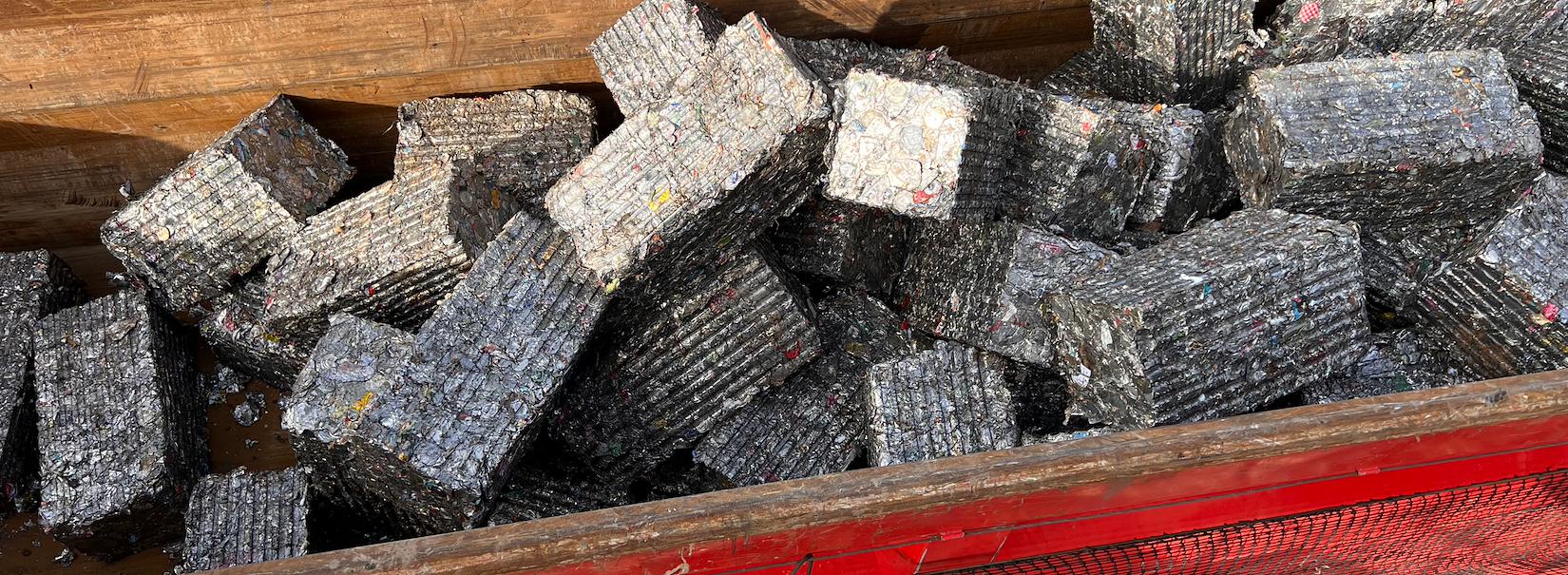
Primary steel production requires substantial inputs of primary raw materials, making circularity an important consideration for addressing material impacts related to resource use. Improved material efficiency, extended product lifetimes, and reduced reliance on virgin raw materials inherently contribute to lower greenhouse gas emissions, reduced pollution, and decreased pressure on ecosystems and biodiversity across value chains. These interlinkages position circularity as a cross‑cutting concept that supports broader environmental protection objectives, while also contributing to resource security and long-term economic resilience.
In the double materiality assessment, three negative impacts, two positive impacts, two financial risks, and one financial opportunity were identified as material. These are presented in the table below and form the foundation of our disclosures about resource use and circular economy.
Table. Summary of IROs, policies, key actions, metrics and targets related to resource use and circular economy
|
Impacts, risks and opportunities |
Category |
Policies |
Key Actions |
Metrics |
Targets |
|---|---|---|---|---|---|
|
Primary Materials: TSN’s use of virgin raw materials such as coal, iron ore, and non-ferrous metals at high volumes and through sourcing practices contributes to environmental degradation, including resource depletion and increased emissions from extraction, handling, and transport. These pressures can negatively affect natural ecosystems and accelerate the depletion of abiotic resources. |
Actual negative impact |
Circularity Policy |
|
Resource inflows |
No targets have been set for the current reporting period |
|
Reliance on External Raw Materials: TSN’s steelmaking operations rely on the continued availability of externally sourced raw materials, including iron ore and coal. This dependence exposes TSN to operational and financial risks arising from supply disruptions, geopolitical developments and volatility in global raw-material markets. |
Risk |
|
Resource inflows |
No targets have been set for the current reporting period |
|
|
Increasing recycled content of steel: TSN is advancing its circularity strategy by increasing the use of scrap in steelmaking, enabling customers to purchase steel with higher recycled content. |
Potential positive impact |
|
Resource inflows, Rate of recycled materials |
|
|
|
Demand for steel with higher recycled content: TSN has an opportunity to access new markets and meet growing customer demand for steel with higher recycled content by advancing its circularity strategy through increased scrap use. This opportunity will materialise if ongoing R&D programmes succeed in producing high-quality steel grades that are currently manufactured using conventional virgin iron ore processes. |
Opportunity |
|
Resource inflows, Rate of recycled materials |
|
|
|
Steel Slag: Using steel slag – a by-product of TSN's steelmaking process – by external companies, particularly in infrastructural applications is supporting circularity. While this supports circularity, improper use of steel slag (e.g., in road construction without adequate treatment or containment) can lead to environmental impact. |
Actual negative impact |
|
External by-products |
No targets have been set for the current reporting period |
|
|
Improper Use of Steel Slag: Financial risk due to potential liabilities and reputational damage arising from the improper use of steel slag by external parties. |
Risk |
||||
|
Blast Furnace Slag: Using blast furnace slag in downstream cement production enhances circularity and decarbonisation in other sectors. |
Actual positive impact |
||||
|
Waste management: Most of TSN’s waste is diverted from disposal. Some waste disposal is, however, unavoidable. Yet, waste treatment is energy-intensive and has a negative environmental impact. |
Actual negative impact |
|
Waste |
No targets have been set for the current reporting period |
Impact, risk and opportunity management
Current financial effects
TSN has assessed the effects of its material risks and opportunities on its financial position and financial performance for the reporting period. The identified risks and opportunities are described in the double materiality outcome, with the related current financial effects presented below.
Reliance on external raw materials
TSN depends heavily on externally sourced raw materials, including iron ore, coal, alloys and scrap, much of which is sourced outside Europe. Disruptions in global supply chains, adverse weather conditions, geopolitical developments and market volatility may affect the availability and pricing of these inputs, with potential implications for cost levels and working capital requirements. The Group uses commodity hedging instruments for certain raw materials to mitigate the impact of price volatility.
TSN experiences current cost effects from raw material price fluctuations, particularly in relation to iron ore, coal and scrap used in steelmaking. These effects are evaluated internally and, accordingly, quantitative information is not disclosed. No material asset impairments or liabilities have arisen directly from this risk during the reporting year. Refer to Note 2 for further information on the raw materials and consumable costs.
Demand for steel with higher recycled content
TSN currently offers a limited range of steel products with a certified, mass-balanced higher recycled content, including Zeremis® Recycled, and the associated financial effect for the reporting year is not material.
The Group recognises an opportunity to access new market segments and respond to increasing customer demand for steel with higher recycled content by further advancing its circularity strategy through increased scrap utilisation. Realisation of this opportunity will depend on the successful progression of ongoing R&D programmes aimed at producing high quality steel grades using higher scrap inputs.
The revenue from sale of steel with higher recycled content is part of Group's revenue disclosed in Note 1.
The finished goods are part of Inventories presented in Note 12 to the consolidated financial statements.
Use of Steel slag
TSN generates steel slag as a byproduct of its steelmaking processes. Under normal circumstances, slag is transferred to a third-party distributor. Recent restrictions introduced by Dutch authorities on the use of steel slag in construction applications have temporarily halted its application in the Netherlands, leading to temporary onsite storage. TSN currently maintains limited permitted storage capacity and may incur additional costs where transport to external storage sites becomes necessary. In this context, TSN applies a Duty of Care principle, requiring responsible handling and application of slag throughout the value chain to minimise risks to human health and the environment.
TSN Group recognises an environmental provision in the balance sheet to cover the anticipated cost of processing and disposing of steel slag across both TSN and third-party storage locations. No fines or penalties related to improper slag use were identified during the reporting period. The amount of provisions for steel slag are part of environmental provisions, disclosed in Note 21 to the consolidated financial statements.
In addition, regulatory developments have increased uncertainty around slag classification. The Inspectie Leefomgeving en Transport (ILT) issued an intention for a penalty order on 23 September 2023 to classify LD slag as hazardous under CLP. On 22 April 2026, the ILT confirmed this position through a formal penalty decision. This development may further impact the classification, handling requirements, and associated costs of steel slag going forward.
Resource use and circular economy policies
TSN developed a new Circularity Policy in the beginning of 2026, which sets out a structured approach to improving resource efficiency, preventing waste, and applying circular economy principles across its operations and, where relevant, the value chain. The policy distinguishes between circularity at process level and product level, reflecting the different levers available within the steel production process and leveraging steel’s unique circular properties.
Table. Policies related to resource use and circular economy
|
Background |
Key Content |
Scope & key stakeholders |
|
|
|
At process level, the policy focuses on conserving finite raw materials through improved material efficiency and yield, increased use of secondary and biobased materials, and optimising the use of residual material streams. The waste hierarchy is applied, prioritising prevention, reuse, and recycling. Where byproducts arise, their use is governed by safety, quality, environmental, and legal requirements to ensure responsible and compliant application.
At product level, the policy recognises steel’s durability and recyclability as key enablers of circularity. Circularity considerations are progressively integrated into the development of new or materially changed products and major process transitions through life‑cycle-based assessments. TSN also explores circular business models, including closed material loops and extended product and service cycles, where technically and economically feasible.
This policy applies to all TSN operations and employees and extends to material categories in the upstream and downstream value chain, including suppliers, logistics partners, and customers. The policy was developed taking into account relevant stakeholder perspectives, informed by structured engagement with internal functions and external stakeholders, including customers and suppliers.
Implementation is supported by established governance and management instruments, including an ISO 14001‑certified Environmental Management System, internal standards and guidance, enterprise risk management processes, internal audits, and independent external certification and data assurance where applicable.
Resource use and circular economy current actions
Resource use and circular economy actions
The tables below describes current (Table 1) and planned (Table 2) actions on the topic of circular economy, including expected outcomes, the planned timeframe and the operational scope. Where actions are listed as “Ongoing”, they will continue also as a “Planned” action but are not listed twice to avoid duplication.
Table. Key current actions related to resource use and circular economy
|
Key actions |
Expected outcomes |
Scope and timeframe |
|---|---|---|
|
Resource inflows |
||
|
Increase the use of post-consumer scrap qualities, capitalising on scrap grades currently being exported out of Europe. |
Increased use of steel scrap, decreased use of primary raw materials; decreased fossil fuel use and GHG emissions; risk mitigation related to availability of high-quality scrap. |
TSIJ + upstream value chain Ongoing |
|
Customer collaboration and tolerance trials with higher recycled content |
TSN + downstream value chain Ongoing |
|
|
Reuse and recycling of internal residual materials |
Decreased use of primary raw materials; decreased waste generation |
TSIJ Ongoing |
|
Biocarbon trials |
Increased use of biocarbon as fossil PCI replacement: decreased fossil resource extraction and decreased fossil fuel use and GHG emissions |
TSIJ and upstream value chain Ongoing |
|
Trialling scrap charge to blast furnace |
Increased use of steel scrap, specifically post-consumer; Decreased use of primary raw materials; decreased fossil fuel use and GHG emissions. |
TSIJ Ongoing |
|
Resource outflows |
||
|
Deploying of slag roadmap and implementing duty of care for by-products |
Preventing negative environmental impact due to improper use; decreased waste generation |
TSN + downstream value chain Ongoing |
|
Research and supply chain collaboration into developing new slag products |
Improved utilisation of slag as a circular by‑product through the development of higher-quality and compliant slag products |
TSIJ + downstream value chain Ongoing |
|
Conducting REACH tests and preparing for applicable regulatory regime for waste export |
Ensure responsible and legally compliant use or export of steel slag and other by‑products by contributing, as a REACH consortium member, to updating the REACH classification for steel slag based on current knowledge and research |
REACH consortium + regulatory authorities Ongoing |
|
Research into useful application of secondary raw materials and waste from new installations |
Identification of safe and compliant circular applications for secondary raw materials and installation-related waste |
TSIJ + supply chain partners Ongoing |
|
Waste |
||
|
Implementation of Waste and By-product classification process |
Preventing waste generation and conforming to applicable environmental and legal requirements |
TSIJ, TSDE Ongoing |
|
General |
||
|
Groeien met Groen Staal (GGS) |
Strengthened circularity through research collaboration (GGS) on scrap recycling, component reuse and Digital Product Passports |
TSIJ + value chain Ongoing |
TSN has concluded that no significant financial resources were allocated to the implementation of its resource use and circular economy actions in the reporting period. The future financial resources expected to be allocated for the implementation of key actions under Green Steel Project Phase 1 are presented in the Climate change chapter.
Resource inflows current actions
Current actions focus primarily on process level circularity, i.e., improving resource efficiency, increasing the use of secondary inputs, and optimising residual streams in line with the waste hierarchy. To conserve finite raw materials and reduce dependence on primary inputs, TSN is increasing the use of post‑consumer scrap and exploring opportunities to utilise scrap qualities that are currently exported out of Europe. TSN also works with customers on collaboration and tolerance trials for higher recycled content steel, helping to improve scrap availability and enabling the use of higher quality recycled content at product level where technically feasible. TSN also promotes reuse and recycling of internal residual materials to reduce primary raw material use and limit waste generation.
In addition, TSN is conducting biocarbon trials to increase the use of biobased inputs and reduce fossil resource use, with expected benefits for both resource efficiency and emissions. Another ongoing initiative is the trial of scrap charging to the blast furnace, intended to support higher post‑consumer scrap use while reducing reliance on primary raw materials (with outcomes dependent on trial results).
Resource outflows current actions
Resource outflows encompass actions on product quality (e.g. recycled content, as also described under ‘Resource inflows’); by-products and waste. Actions related to by-products and waste are detailed below.
The actions on responsible by-product use are outlined in a slag roadmap and are centered on implementing actions to improve the use of slag as a by-product, reducing waste generation and preventing negative environmental impacts from improper use. To expand safe circular applications, TSN collaborates with supply chain‑partners on the development of slag products and, as a member of a REACH consortium, contributes to updating the REACH classification for steel slag based on current knowledge and research, alongside preparatory work for applicable regulatory requirements (including where relevant for export).
In addition, TSN has completed research (FY26) into useful applications of secondary raw materials and wastes from new installations, supporting future circular applications subject to safety, quality, environmental and legal requirements, in line with TSN’s Duty of Care commitment.
To strengthen responsible use in practice, TSN is reinforcing its Duty of Care for slag use. While current temporary restrictions in the Netherlands limit the application of steel slag in construction and may constrain its use in certain applications, TSN continues to implement measures to ensure safe handling and future use. For applications in the Netherlands where slag is used in contact with soil, TSN will provide Dutch customers with a risk document in line with the milieuverklaring bodemkwaliteit requirements, defining safe applications and specifying where slag can be used without adverse effects on human health or the environment. The document places particular emphasis on preventing health risks from inhalation and skin, mouth and eye contact, and TSN will require customers to confirm in writing that they have understood the guidance before applying slag. Please also refer to the Licence to Operate section of the Management Report for a concise overview of TSN’s actions in relation to steel slag.
One of the most important actions under Resource outflows is the ongoing waste and by‑product classification process supporting compliant management of residual streams, waste prevention and improving data quality.
Tata Steel IJmuiden (TSIJ) has received three investigative reports from the competent Environmental Protection Authority (Omgevingsdienst Noordzeekanaalgebied, ‘OD’) regarding its waste and substance management practices. TSIJ immediately started an improvement programme, responded to the relevant questions, provided comments on the preliminary results, and submitted them to the OD. TSIJ is in full cooperation with the authority, providing requested information and engaging constructively to clarify open points. In parallel, we are taking measures and actions to strengthen the waste classification and management processes as well as to improve data quality.
Resource use and circular economy future actions
TSN’s most important circularity future action is the Green Steel Project, which includes the transition to DRI‑ EAF steelmaking. This transition is expected to materially strengthen circularity at process level by increasing TSN’s recycled content and thereby reducing reliance on finite primary raw materials, where technically and economically feasible. Further information on Green Steel Project is provided in the Climate change chapter.
Table. Key future actions related to resource use and circular economy
|
Key actions |
Expected outcomes |
Scope and timeframe |
|---|---|---|
|
Resource inflows |
||
|
Building new scrapyards |
Increased use of steel scrap with reduction in noise, PM10, coarse dust |
TSIJ Phase 1 GSP |
|
Resource outflows |
||
|
Implement new processing methods for slag |
Shift LD and EAF slag to applications with greater control over potential impacts (avoid waste); contribute to PM10 emission reduction |
TSIJ Phase 1 GSP |
|
Waste |
||
|
Implementation of Waste policy on application of Waste hierarchy |
Preventing waste generation and conforming to applicable environmental and legal requirements |
TSIJ, TSDE Future reporting periods |
|
General |
||
|
Further implementation of Circular Economy policy initiatives (e.g. R-ladder operationalisation and awareness) |
Decreased use of primary raw materials; decreased fossil fuel use and GHG emissions decreased waste generation |
TSIJ, TSDE Start: FY27 |
|
Exploring extension of service life at final product level (e.g.: de-mounting, re-use and re-manufacturing) |
Prioritising circular solutions higher in the R-ladder, leading to decreased use of primary raw materials, waste generation and GHG emissions |
TSDE Start: FY27 |
In addition to the Green Steel Project, TSN plans targeted measures to support increased secondary input use and improved residual stream‑management. On resource inflows, TSN plans to build new scrapyards in Phase 1 of the Green Steel Project to facilitate higher scrap utilisation and improve handling conditions, with additional co‑benefits for local environmental performance (e.g., reductions in noise and dust as referenced under Pollution).
On resource outflows, TSN plans to implement new slag processing methods and handling methods to enable more controlled and responsible applications of LD and EAF slag, reduce waste generation, and steer use toward applications where potential environmental or health impacts can be better managed and slag properties (such as high pH) can be used as a functional advantage, in line with safety, environmental and legal requirements. More broadly from FY27 onward, TSN intends to continue rolling out circular economy initiatives and awareness activities across relevant operations to support continuous improvement consistent with the R-ladder and the waste hierarchy.
Metrics and targets
Resource use and circular economy targets
TSN aims to promote circularity by increasing the amount of secondary steel (scrap) into its production process. We aim to increase site-wide recycled steel intake from a 17% baseline (2019) toward 30% (site-wide average) when the DRI-EAF installations are operational. Since steel scrap displaces raw materials such as iron ore and cokes, the use of secondary steel is an important contributor to the reduction of primary raw material use and therefore circularity.
The recycled content target has been established voluntarily based on a comprehensive assessment of technological feasibility, logistical and supply chain-conditions, and prevailing market dynamics. The target also reflects input received through stakeholder engagement and consultation regarding both the required and the technically achievable levels of recycled content within our production system. Target achievement is subject to several external and operational preconditions linked to the Green Steel Project, which may influence TSN’s ability to deliver these targets in a timely manner.
For the integrated steelmaking route, progress toward this target will be monitored, evaluated, and disclosed annually.
Table. Targets related to resource use and circular economy
|
Domain |
Target |
Baseline value |
Target value |
Target year |
Scope |
|
Secondary materials (scrap) |
Increase recycled content to 30% |
17% (2019) |
30% |
20301 |
IJmuiden site |
Steel scrap availability remains structurally constrained due to the increasing focus on scrap-based steelmaking and the long service life of most steel applications, which delays the return of material to the recycling loop. As a result, the volume of high-quality scrap accessible on the European market is insufficient to meet growing demand for secondary steelmaking. By increasing sourcing from end-of‑life scrap streams, including shredder scrap, TSN contributes to a more circular materials system by recovering steel that might otherwise be downcycled or lost. This practice supports the efficient use of resources, reduces dependency on primary raw materials, and enhances Europe’s long-term resource security.
For other resource inflows, performance is subject to continuous improvement and monthly financial reporting and analysis of any trends or non-conformities within these data. TSN will continue to monitor and report resource use annually and monitor key materials consumed in its production process. In addition, the implementation of the Circularity policy and actions as described under Current and Future actions and resources are monitored on a periodic basis and their progress reported on.
For by-products, performance is monitored through the implementation status of the slag roadmap. A monitoring system will be introduced to monitor the objectives as set out in the JLoI and will be closely supported by TSN’s Risk & Compliance organisation. The implementation of the duty of care principle requires written confirmation from customers on the application guidance.
For its by-products, TSN aims to maximise circular and sustainable applications and will continue to monitor its production and destination through the current TSN hierarchy for by-product and waste classification. For its slag by-product, TSN prioritising bound applications such as concrete, cement, and aggregates. These applications significantly reduce the risks of improper use and leaching, while supporting the building materials sector in achieving its circularity and sustainability objectives. A significant share of BF slag is already supplied directly to the cement industry.
In parallel, TSN is actively implementing a strategic roadmap to shift both current and future steel slags toward similar high-value, bound applications. This effort is being pursued in close collaboration with industry partners, knowledge institutes, and OEMs. Performance on responsible use of steel slag is monitored through the implementation status of the slag roadmap. A monitoring system will be introduced to monitor the objectives as set out in the JLoI and will be closely supported by TSN’s Risk & Compliance organisation. The implementation of the Duty of Care principle requires written confirmation from customers on the application guidance.
For waste, TSN aims at completing the waste and by-product classification process. The current application of the waste hierarchy and related waste management processes is subject to regular audits within the frameworks of BES6001 and ISO 14001.
Resource use and circular economy metrics
Resource inflows metrics
Iron ore is the main precursor of ironmaking and the largest material input by mass in TSN’s production processes. Coal and coke function as essential reductants in iron and steelmaking, playing a central role in enabling the conversion of iron ore into hot metal. Auxiliary materials support steelmaking by removing impurities and enabling the formation of slag, which also contributes to valuable byproduct streams. Critical and strategic raw materials are used in several processes, amongst which secondary metallurgy, where they are used to modify and enhance the steel’s properties according to specific performance requirements such as strength and hardness or corrosion resistance.
Steel scrap is a crucial raw material input by mass and an important enabler of circularity because of its contribution to reducing demand for primary raw materials. Reused and recycled materials - such as slags, dusts, sludges and oxides - further support circularity by recirculating materials back into production and reducing the need for disposal.
Resource inflows are dominated by iron ore, which accounts for the majority of total key materials, followed by coal and coke. Secondary resourced materials represent 14% of total key materials, while critical and strategic raw materials account for 16%.
The Green Steel Project is not only expected to increase the amount of steel scrap used in the process, but also reduce the amount of coal and coke used.
Table. Resource inflows
|
Resource inflows |
2025/26 |
|
t |
|
|
Total key materials1 |
15,681,266 |
|
Iron ore |
8,502,753 |
|
Coal and coke |
3,825,225 |
|
Auxiliary materials |
1,097,394 |
|
Critical and strategic raw materials |
2,489,216 |
|
Total secondary resourced materials |
2,202,763 |
|
Steel scrap |
1,380,177 |
|
Reused and recycled materials |
822,586 |
|
Percentage of total key materials |
% |
|
Secondary resourced materials |
14 |
|
Critical and strategic raw materials |
16 |
Accounting policies for resource inflows metrics
Material selection methodology
The included materials refer to resource use in IJmuiden only and were selected because of the volume, economic and operational importance, and relevance to circularity. Since the resource inflow of TSN’s downstream locations is mostly steel from IJmuiden, the most important raw materials are covered by reporting TSIJ’s resource inflow.
The exception is the category Critical and Strategic Raw Materials, which was solely selected based on the combination of economic importance and supply risk. For that reason, all relevant TSN entities are included in this metric that use critical and strategic raw materials in their operations, namely
-
Apollo Metals Ltd
-
Hille&Muller GMBH (Profit Centre Dusseldorf)
-
Thomas Steel Strip Corp.
Product packaging was considered immaterial due to the limited volumes consumed and is therefore not included in Resource inflows.
Methodology, assumptions and limitations
Data are based on records of procured data with the exception of one category within Critical Raw Materials, which was calculated based on material composition information from the material data sheet. Some materials are reported under multiple categories. For example, coking coal is reported under both “Coal and coke” and “Critical and strategic raw materials”. To avoid double counting, these materials are excluded from the sum of “Total key materials”.
The distinction between technical and biological materials is not considered a driver of material impacts, risks, or opportunities, because as of now no biological materials are being used.
Resource outflows metrics
Durability and reparability
Durability and repairability depend on the application, use and maintenance of a material in final operating conditions and should therefore be assessed on the final product level rather than at the intermediate product level. The table below therefore provides indicative service life-ranges for typical end‑use applications, reflecting the functional lifespan of the finished product. Note that the figures relate to the useful service life of the product rather than to the steel properties itself, and the lifespan may be extended by repair, refurbishment, or reuse of the full product. Steel as a material is typically considered highly durable and repairable due to its mechanical strength and resistance to environmental factors such as moisture and heat.
Table. Typical steel product lifespan by sector
|
Sector |
Products |
Typical applications |
Reference service life |
|
Packaging |
Tinplate, laminated steel |
Steel cans |
0 – 5 years |
|
Plating |
Electroplated steel |
Batteries, electrical equipment |
0 – 20 years |
|
Engineering |
Hot rolled through organic coated steel |
Domestic appliances, agriculture, housing |
5 – 50 years |
|
Automotive |
Hot rolled through hot-dip galvanised steel; electroplated steel; precision tubes |
Chassis and suspension, panels, seating |
15 – 25 years |
|
Construction |
Roof and wall sandwich panels, profiled sheets; structural tubes |
Industrial and commercial buildings. |
50 – 70 years |
Rate of recyclable materials metrics
The rate of recyclable materials assesses to what extent the key products manufactured by TSN are recyclable. For crude steel - the primary product manufactured at TSIJ - the recyclability rate is 100%. Recyclability considerations therefore may become more relevant once additional materials are introduced during downstream processing or as part of the final product design.
Downstream steel products may incorporate metallic additions (e.g., tin, zinc, nickel) as well as non-metallic components such as coatings, plastics, foams, adhesives, or paints. Among these, only non-metallic surface coatings are considered non‑recyclable.
For TSN’s key products the recycling potential is assessed as close to 100%. These products can typically be reprocessed without any loss of quality.
Accounting policies for rate of recyclable materials
Material selection methodology
The recyclable material metric comprises an assessment at the final product level.
Key Products for TSIJ include Crude steel (slab); Hot rolled coil; Pickled hot rolled coil; Cold rolled coil; Finished cold rolled coil; Hot dip galvanised coil; Electrolytic tinplate; Tin-free steel (TCCT®) and Laminated Steel Coils (Protact®); Organic coated coil; Hot dip galvanised coils.
Key products for TSDE include Coils and Sheets; Hot dip galvanised coils; Organic coated coil; Laminated Steel Coils (Protact®); Electro-plated coils and sheets; Structural and Precision tubes; Panels and Profiles.
Product packaging was considered immaterial and is therefore not included in Resource outflows.
Methodology, assumptions and limitations
For these products, we evaluate recyclability based on the definition of “recyclable” in ISO 14021:2016 (7.7.1) supplemented with an assessment of the handling and outcome of each material during the recycling process: if a material is able to be recovered separately or ends up in a new product, it is considered recyclable; if it is incinerated, degraded, or lost, it is not considered recyclable.
Rate of recycled materials metrics
The rate of recycled materials measures the share of recycled input materials - steel scrap - used in TSN’s production. It is one of the main measures TSN is implementing to increase its circularity performance within the Green Steel Project.
The recycled content has increased from 20.0% to 21.2% in the last year, reflecting TSN’s effort to maximise the amount of scrap used in iron- and steelmaking. Structural improvement projects were implemented in order to remove bottlenecks to increased use of scrap in the production process.
The upward trend indicates continued progress toward the target of achieving 30% recycled content under Phase 1 of the Green Steel Project.
Table. Rate of recycled content of TSIJ's key product
|
Rate of recycled materials |
2025/26 |
2024/25 |
|
% |
% |
|
|
Total recycled content |
21.2 |
20.0 |
|
Pre-consumer scrap |
14.7 |
14.1 |
|
Internal pre-consumer scrap |
6.8 |
6.9 |
|
External pre-consumer scrap |
8.0 |
7.2 |
|
Post-consumer scrap |
6.5 |
5.9 |
Accounting policies for rate of recycled materials
Methodology, assumptions and limitations
The recycled content metric is calculated as the share of steel scrap used in relation to total steel produced and aligned with the definitions as outlined in ISO 14021:2016. Steel scrap refers to ferrous material that cannot be directly recovered in the process it was produced (e.g., ferrous production residue starting from slab). Total steel produced refers to crude steel production. Data is based on measured consumption of scrap, combined with a measured/calculated figure for crude steel as described in Climate change. The classification of pre- and post-consumer is based on categorisation of scrap into EFR or BDSV categories.
This metric is calculated for TSIJ only. Due to the low volumes of (external) material added by TSN’s downstream entities, the added recycled content at DE level was considered immaterial.
Note that part of the recycled content is reserved for Zeremis® Recycled customers. Companies who have not purchased Zeremis® Recycled should use the 2019 benchmark in their reporting, which is 17.6%.
External by-products metrics
TSN’s steelmaking processes generate a range of by‑products that contribute meaningfully to circular economy and decarbonisation objectives when responsibly processed and applied. A portion of these materials is reused or recycled internally, supporting the reduction of waste and primary resource inflows, while other by‑products are supplied externally as certified secondary raw materials. For example, blast furnace slag is used as a low-carbon substitute for clinker in the cement industry or as a replacement for natural aggregates in civil engineering applications.
Steelmaking slags, produced during primary and secondary metallurgy, are processed into stone‑like materials and certified for use as secondary building materials, thereby reducing the extraction of natural resources and supporting circularity and decarbonisation in other sectors. However, the application of steel slag is currently subject to temporary regulatory restrictions, limiting its use in practice.
Looking ahead, the transition to lower CO₂ steelmaking will significantly change production routes and therefore alter the profile of by‑products generated. Some existing materials may be phased out, while new secondary materials are likely to emerge. TSN aims to maintain its commitment to high-value, responsible utilisation of all by‑products by collaborating with research institutes, customers and partners to identify long-term solutions.
Because choosing steel as a material inherently means choosing the generation and use of slag, TSN emphasises the importance of clear and consistent regulatory frameworks in Europe that enable the safe and high-quality application of these secondary materials. In the current context of temporary restrictions on the use of steel slag in the Netherlands, regulatory clarity remains important to enable safe use. TSN therefore supports the development of regulations and engages with regulators and partners to ensure compliant application.
In the Netherlands and across Europe, scrutiny of slag use has increased due to historical cases of improper application. TSN therefore emphasises responsible end use throughout the value chain, including clear application guidance (duty of care), transparent and in-depth communication with off-takers and alignment with evolving regulations. By prioritising quality-controlled processing, traceability and detailed duty of care agreements with off-takers, TSN aims to prevent unintended environmental impacts and to ensure that steel slags function as safe, reliable substitutes for natural materials.
Externally sold by-products amounted to 1.6 million tonnes in 2025/26, with blast furnace slag representing the largest share, followed by steelmaking slag.
Table. Metrics related to externally sold by-products
|
External by-products |
2025/26 |
|
t |
|
|
Total weight of key externally sold by-products |
1,596,607 |
|
Blast furnace slag |
1,106,430 |
|
Steelmaking slag |
393,462 |
|
Other by-products |
96,715 |
Accounting policies for external by-products
Methodology, assumptions and limitations
Data are based on measured production data from TSIJ and Tata Steel Maubeuge SAS. Relevant definitions are applied based on TSN’s understanding of, and alignment with, applicable legal and regulatory requirements at the moment of reporting, including, but not limited to, Dutch application guidance of waste classification.
The figures reported reflect the classification status at the time of reporting. As regulatory interpretations and requirements evolve, updates to the classification framework may lead to the reclassification of by-products as waste in the future, resulting in potential adjustments to reported figures.
Waste metrics
Most of TSN’s waste is generated at TSIJ. TSN follows the waste hierarchy (prevention; preparing for re-use; recycling; recovery; disposal). TSIJ aims to prevent waste generation by maximising the reuse and recycling of internal residual material (see ‘Resource inflow’) and the production of high-quality by-products (see ‘Resource outflow’).
Total waste generated increased from 215,171 tonnes in 2024/25 to 335,476 tonnes in 2025/26. However, the figures are not directly comparable, as the 2024/25 data excludes waste from downstream entities. On a comparable basis, TSIJ waste volumes increased slightly from 215,171 tonnes in 2024/25 to 218,154 tonnes in 2025/26. Overall, the total volume of waste remains broadly stable. However, there is a shift in treatment and composition, with an increase in waste directed to disposal, a decrease in recovered waste, and a relative increase in hazardous waste compared to non-hazardous waste.
Waste directed to landfill increased for both hazardous (+35%) and non-hazardous (+29%) waste streams. The increase in hazardous waste to landfill is primarily driven by SIFA filter dust and HO filter cake, which are disposed only once or twice a year and therefore timing of disposal can strongly influence the yearly volume. The increase in non-hazardous waste to landfill is mainly attributable to Combi bio (wastewater treatment) sludge and PEFA filter dust from new or improved environmental installations. Hazardous waste recycled increased by 11%, driven by higher volumes of oxy sludge due to reduced internal reuse, despite reductions in other streams. In contrast, non-hazardous waste recycled decreased by 11%, mainly due to lower volumes of rubble, soil, and slag. Waste treated through other recovery operations (including incineration with energy recovery) increased by 31% for hazardous waste, reflecting fluctuations across multiple smaller streams rather than a single structural driver.
Only a very small proportion of total waste (0.1%) is reported with an unknown destination, primarily reflecting waste streams that are temporarily unclassified at the time of reporting and pending assignment to the appropriate treatment category.
Table. Waste metrics
|
Waste metrics |
TSN |
TSIJ |
TSIJ |
|||
|
2025-26 |
2025-26 |
2024-25 |
||||
|
t |
t |
|||||
|
Total waste generated |
335,476 |
218,154 |
215,171 |
|||
|
Hazardous |
Non-hazardous |
Hazardous |
Non-hazardous |
Hazardous |
Non-hazardous |
|
|
t |
t |
t |
t |
t |
t |
|
|
Waste diverted from disposal |
49,934 |
226,073 |
37,952 |
121,942 |
34,106 |
137,502 |
|
Preparation for reuse |
1,197 |
2,555 |
0 |
0 |
0 |
0 |
|
Recycling |
46,806 |
216,204 |
37,228 |
120,990 |
33,552 |
136,419 |
|
Other recovery operations |
1,931 |
7,314 |
724 |
952 |
553 |
1,083 |
|
Hazardous |
Non-hazardous |
Hazardous |
Non-hazardous |
Hazardous |
Non-hazardous |
|
|
t |
t |
t |
t |
t |
t |
|
|
Waste directed to disposal |
48,146 |
10,898 |
47,459 |
10,791 |
35,170 |
8,393 |
|
Incineration |
241 |
76 |
0 |
0 |
0 |
0 |
|
Landfill |
47,738 |
10,822 |
47,459 |
10,791 |
35,170 |
8,393 |
|
Other disposal operations |
167 |
0 |
0 |
0 |
0 |
0 |
|
Hazardous |
Non-hazardous |
Hazardous |
Non-hazardous |
Hazardous |
Non-hazardous |
|
|
t |
t |
t |
t |
t |
t |
|
|
Total amount of waste for which the final destination is unknown |
173 |
253 |
8 |
2 |
0 |
0 |
|
% |
% |
% |
||||
|
Proportion of waste for which the final destination is unknown |
0.1 |
0 |
0 |
|||
|
t |
t |
t |
||||
|
Total amount of radioactive waste |
0 |
0 |
0 |
Accounting policies for waste metrics
Material selection methodology and data sources
Waste figures are based on Tata Steel IJmuiden and selected downstream entities (TSDE). Downstream entities are included where total waste generation exceeds 1% of combined waste across TSN, as well as entities below this threshold that generate a significant share of hazardous waste due to their relative environmental impact. This approach results in coverage of approximately 96% of total waste generated.
Downstream entities included in scope are:
-
Halmstad Steel Service Centre AB
-
Hille & Müller GmbH (Profit Centre Düsseldorf)
-
Layde Steel S.L.
-
A.B.-Profiel BV
-
Service Centre Gelsenkirchen GmbH
-
Service Centre Maastricht BV
-
Société Européenne de Galvanisation (SEGAL) SA
-
Tata Steel Maubeuge SAS
-
Tata Steel Nederland Tubes BV
-
Thomas Steel Strip Corp.
Waste figures for 2024/25 exclude downstream entities and are therefore not directly comparable to 2025/26.
Methodology, assumptions and limitations
TSIJ generates various types of waste, both non-hazardous and hazardous. Most non-hazardous waste consists of recyclable waste in the form of ferrous scrap, skulls or other metallic residues. Other non-hazardous waste consists of construction and demolition waste in the form of rubble, gravel and soil. Hazardous waste consists of a variety of process- and non-process-related waste, such as gas condensates and sludges.
Tata Steel’s Downstream entities’ main waste streams consist of steel scrap, zinc dross and other metallic residues, solvents, paints and packaging material.
Hazardous waste may be recycled or disposed of; NORM waste may be hazardous or non-hazardous and is disposed of through landfilling in accordance with applicable safety and environmental regulations.
Data for IJmuiden are measured data from third parties (waste processors) or TSIJ’s weigh bridges. For downstream entities, where financial year data is not available at the time of reporting, calendar year data may be used as a proxy for financial year reporting, including an estimate for the final two months where data is not yet available at the time of reporting.
Relevant definitions are applied based on TSN’s understanding of and alignment with applicable legal and regulatory requirements at the time of reporting, including, but not limited to, Dutch application guidance of waste classification. The figures reported reflect the classification status at the time of reporting. As regulatory interpretations and requirements evolve, future updates to the classification framework may introduce changes.
The definition of waste excludes material that is classified as a by-product or that is reused or recycled internally.
NORM-waste is defined as material with activity concentrations of ≥ 1 Bq/g.
The reporting boundary for reporting resource use and circular economy does not include the Velsen Power Plants (acquisition recognised in the Financial Statements as of 1 January 2026). TSN is using the relief for mergers and acquisitions for the 2025/26 reporting period. We will analyse materiality of impacts, risks and opportunities in relation to the acquired power plants and identify material information to be reported in the 2026/27 Sustainability Statements. Preliminary analysis points at likely materiality of the impacts related to the topic of circular economy and resource use, particularly waste.