

Social
Own workforce
Why it matters
TSN’s workforce is central to its operations and is significantly affected by the ongoing organisational transformation.
Key objectives
The double materiality assessment identified eight workforce-related impacts as material, including secure employment, health and safety, working conditions, training, diversity, and social safety.
During the reporting year, TSN implemented its largest transformation in thirty years, leading to workforce reductions and increased focus on social dialogue, wellbeing and employment support.
TSN also continued to apply collective labour agreements, maintain high collective bargaining coverage, and operate a health and safety management system covering the entire own workforce. Reskilling and training activities focused on supporting the transition to new production technologies.
Looking ahead, TSN plans to formalise workforce policies, strengthen grievance and remediation mechanisms, expand reskilling programmes, and introduce measurable targets once the new organisational model is fully embedded.
|
Own workforce |
2025/26 |
|
headcount |
|
|
Total number of employees |
11.878 |
|
Total number of non-employees |
915 |
|
Employee turnover |
% |
|
Rate of employee turnover |
11% |
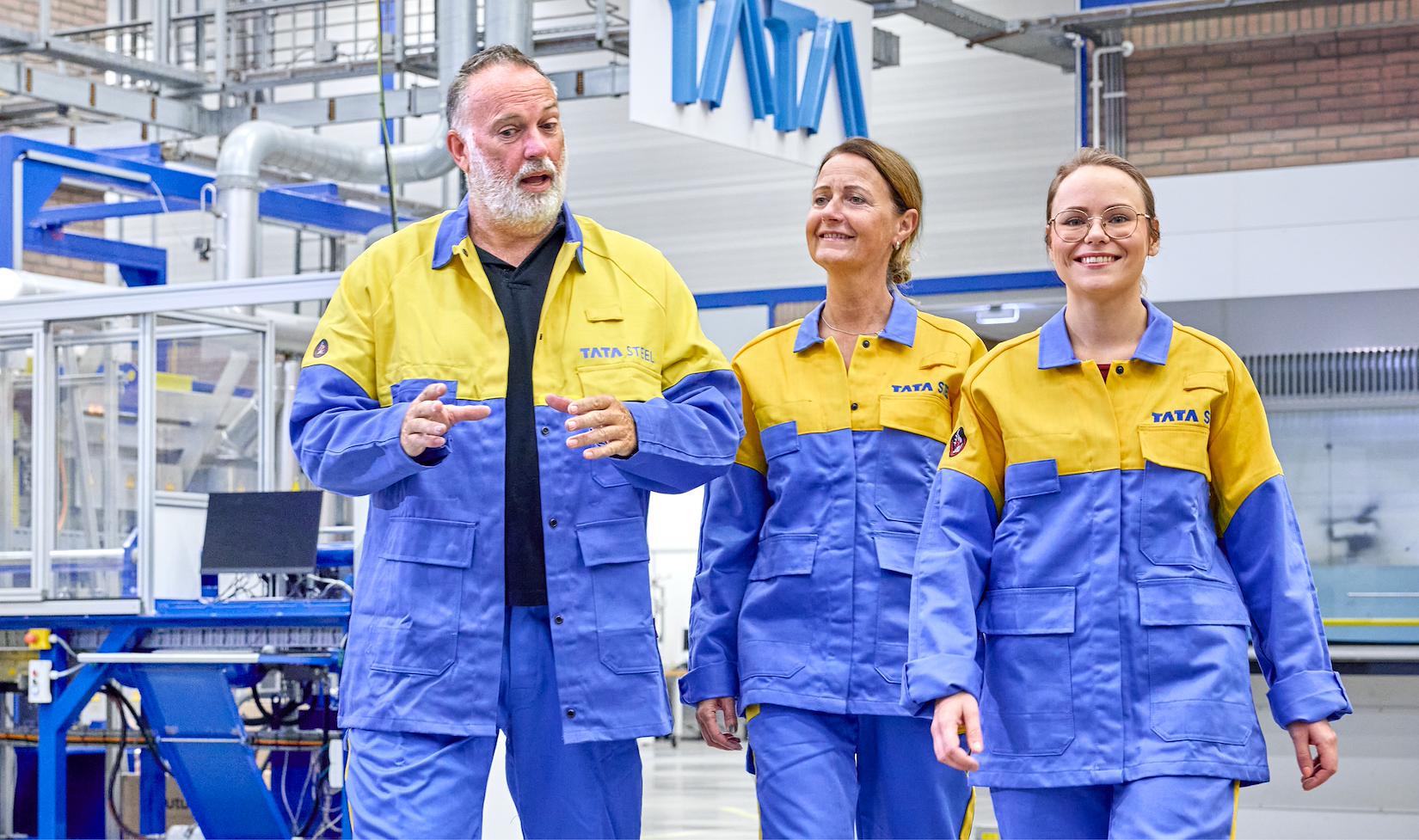
Table. Summary of IROs, policies, key actions, metrics and targets related to own workforce
|
Impacts, risks and opportunities |
Category |
Policies |
Key Actions |
Metrics |
Targets |
|---|---|---|---|---|---|
|
Secure employment: Insecure employment, characterised by job instability at this moment due to restructuring at TSN, is negatively impacting workers by increasing uncertainty, reducing morale, and weakening long-term workforce retention. |
Actual, Negative impact |
HR foundation policy, CLA, Code of conduct |
|
|
No formal quantitative target yet – TSN monitors workforce trends, turnover and planning indicators during the organisational transition. Targets will be set once the new workforce model is fully implemented. |
|
Working time & health and wellbeing: Restructuring, understaffing and additional regulatory requirements increase workloads and working hours, may result in stress and reduced work-life balance, which can contribute to health issues over time. |
Potential, Negative impact |
CLA |
|
TSN will assess the option developing an entity-specific metric. |
No formal quantitative targets for wellbeing indicators yet – monitored through trends and utilisation of support channels. TSN continuously monitors sickness absence rates over time and benchmarks them on a national level. |
|
Collective bargaining: A robust Collective Labour Agreement (CLA) at Tata Steel Nederland supports fair labour conditions, strengthens social dialogue, and contributes to workforce stability and a just transition. |
Actual, Positive impact |
HR foundation policy, CLA |
|
Collective bargaining coverage and social dialogue |
No formal quantitative target set for collective bargaining. TSN strives to maintain very high collective bargaining coverage across TSN sites. |
|
Safety: Accidents and associated injuries may occur due to the physical nature of operational activities and unsafe behaviour, even with occupational health and safety measures in place. |
Actual, Negative impact |
Safety policy |
|
Health and safety metrics |
Zero fatalities – ongoing target (all sites incl. contractors). Baseline: 0 → Maintain 0 (ongoing). |
|
Training and skills development: TSN’s suspension of most soft skills and leadership training due to financial constraints limits employee development, which may hinder career growth, lower morale and reduce long-term workforce capabilities. |
Actual, Negative impact |
HR foundation policy |
|
Training and skills development metrics Disclosures are phased-in. |
No formal quantitative targets yet – training hours per employee and participation in development reviews are monitored during the transition period until targetsetting is possible. |
|
Reskilling for green transition: TSN is reskilling its workforce from obsolete processes such as coke making to new more sustainable processes like DRP-EAF, creating employment opportunities for workers who would otherwise face job loss. |
Actual, Positive impact |
HR foundation policy |
|
Training and skills development metrics (integrated next year) |
No quantitative reskilling targets set yet – TSN continues assessing competencies for future target‑ setting. |
|
Diversity: Insufficient diversity may lead to an exclusive work environment, perpetuating biases and limiting opportunities for underrepresented groups, contributing to inequality and potentially causing employee dissatisfaction |
Actual, Negative impact |
D&I Policy |
|
|
No quantitative targets set Targets to be formally reviewed in 2026. |
|
Anti-harassment and anti-discrimination: Failure to foster a socially safe and inclusive workplace through effective prevention of transgressive behaviour and protection against discrimination may lead to a harmful work environment, increased stress, and adverse impacts on employees’ physical and mental health. |
Potential, Negative impact |
D&I Policy, Human rights policy |
|
Incidents of discrimination and other human rights incidents |
No quantitative targets set – TSN monitors incidents through the Integrity Line and Complaints Committee. Continuous improvement of social safety guided by surveys and assessments. |
Impact, risk and opportunity management
TSN is navigating a challenging period driven by geopolitical change, trade and supply chain disruptions and rising energy costs. To remain competitive and enable investment in new steel production methods, TSN is implementing its largest reorganisation in thirty years, including a leaner organisational structure to support a sustainable, green future. Each decision to discontinue a role is approached with care, in close cooperation with works councils and trade unions, supported by a Social Plan for affected employees. The organisational change is delivered through cross-functional workstreams to enhance agility, decisiveness and flexibility and to reduce fixed costs. In parallel, TSN is developing reskilling pathways linked to the green transition to support workers impacted by the phase-out of legacy processes and prepare them for new roles associated with technologies such as DRP-EAF.
Own workforce policies
TSN’s key policies establish the overarching framework governing its practices and interactions with its own workforce, underscoring its commitment to a safe, inclusive and respectful workplace, as well as to appropriate working conditions and employee development.
While the majority of TSN’s workforce comprises its own employees, our commitment to health, safety and a socially inclusive workplace also applies to non‑employees.
Table. Policies related to own workforce
|
Health & Safety Policy |
||
|
Background |
Key content |
Scope & key stakeholders |
|
|
|
|
HR Policy |
||
|
Background |
Key content |
Scope & key stakeholders |
|
|
|
|
TSN Diversity, Equity & Inclusion Policy |
||
|
Background |
Key content |
Scope & key stakeholders |
|
|
|
|
TSN Human Rights Policy |
||
|
Background |
Key content |
Scope & key stakeholders |
|
|
|
|
TSN Code of Conduct |
||
|
Background |
Key content |
Scope & key stakeholders |
|
|
|
|
CAO Tata Steel 2023–2025 |
||
|
Background |
Key content |
Scope & key stakeholders |
|
|
|
Health and safety policies
Safety is the highest priority of our operations. Our IJmuiden steel plant and all our downstream entities’ sites operate in a demanding industrial environment that entails daily health and safety risks for our own workforce, contractors, third-party workers and potentially also visitors. To mitigate this impact, TSN has a policy in place for safeguarding the health and safety of its own workforce. Our Health & Safety Policy applies to all TSN employees and non-employees across every location, as well as anyone working on our premises.
The policy outlines the key principles that guide our approach to health and safety. We believe that all work-related accidents are preventable and expect safe working practices from all employees, contractors, and visitors.
The Health & Safety policy objective is to protect well-being, reduce exposure to work-related risks, and ensure we meet health and safety requirements. The application of these commitments to workers outside TSN’s own workforce is addressed further in the Responsible value chain chapter.
We operate a comprehensive management system to prevent occupational risks and ensure a safe working environment. Our TSN Code of Conduct reinforces these expectations by requiring compliance with relevant laws and internal rules, and by encouraging the reporting of concerns without fear of retaliation. Together, these measures form the foundation of TSN’s structured and continuously improving approach to occupational health and safety.
Working conditions policies
Our workforce is at the core of TSN’s operations. This is why our policies establish clear expectations for fair, safe, and transparent workplace conditions throughout TSN’s operations. These include the Code of Conduct, the HR foundation policy, and a firm commitment to the Collective Labor Agreement.
The TSN HR Policy is our foundation, setting out the core principles for fair, transparent, and supportive working conditions. It outlines how we define roles, manage performance objectively, provide development opportunities, and offer locally competitive compensation. We commit to equal opportunities in hiring and career growth, and we ensure safe channels, including anonymous ones, for raising concerns. This policy provides our overarching guiding principles, while supporting policies translate these principles into concrete procedures and day-to-day guidance.
TSN Code of Conduct builds the basis for how our entire workforce interacts with each other. Built on respecting human rights, it mandates integrity, transparency, and respect from all representatives. The Code of Conduct is available and must be respected by everyone in the workforce to foster a professional and safe workplace, with clear expectations for lawful behaviour, privacy, asset protection, and ethical business conduct toward stakeholders.
Collective bargaining policies
At TSN, many employees are covered by a collective labour agreement, resulting in high collective bargaining coverage. Specifics can be found in the table Collective bargaining coverage. CLA agreements complement our foundation policies by setting out the legally binding terms and conditions of employment, covering working hours, shifts, overtime, leave, salary scales, pay components, training, job classification, and the rights of worker representatives. The CLA ensures transparency and consistency across these areas and helps us maintain fair working conditions for everyone at TSN.
Diversity and equal treatment policies
This year, we worked on updating our Diversity & Inclusion Policy, which is yet to be formally adopted, to reaffirm our commitment to diversity, equal treatment, equal opportunities, and social safety across TSN. The policy applies to all workers, regardless of role, contract type, or location, and covers key topics such as diversity, antiharassment, and non-discrimination.
The policy sets clear expectations for a safe, fair, and respectful work environment. We do not tolerate discrimination or harassment and uphold every individual’s right to work free from exclusion or bias. We recognise that D&I strengthens creativity, collaboration, and overall performance, and supports our ability to attract and retain talent.
Human Rights Policy
TSN is currently developing a Human Rights Policy, which sets our commitment to respect human rights across our sites, local communities and business relationships, in line with the UN’s Guiding Principles, relevant ILO conventions and applicable laws. Upholding human rights is integral to our values and to responsible business conduct and long-term sustainability. Our approach to human rights is risk based. Further information on the Human Rights policy is provided in the Responsible value chain chapter.
Our Human Rights Policy is aligned with international standards and addresses child labour, forced or compulsory labour, and human trafficking.
Engagement with own workforce and workers’ representatives, existence of channels for own workforce to raise concerns or needs and approaches to remedy
Engagement with own workforce and workers’ representatives
Throughout the year, TSN intensified its engagement with employees and works councils and trade unions as the organisation entered a period of transformation linked to the transition toward low-CO₂ steelmaking. The ongoing transition requires, among other initiatives, restructuring and job reductions, making open, timely and inclusive engagement essential. To inform all employees about this process and gather perspectives from those who may be impacted by the restructuring, TSN engaged in multiple forms of information sharing, consultation, and participation.
At TSN IJmuiden (TSIJ), several work councils represent employees across individual operational units, while TSDE has its own representative structures. Across all entities, consultations take place between the Managing Director and employee representatives, with members appointed to both the IJmuiden Group Works Council and the Central Works Council. Additional engagement with trade unions on employment terms occurs regularly at both local and central levels.
Throughout the year, the Central Works Council was especially involved in discussions related to restructuring. From April onwards, employees received regular updates about the transition to the Green Steel Project, challenging market conditions and TSN’s long-term ambition to become a leading European steel producer and what it will mean for the workforce. Monthly intranet updates, structured consultation rounds and negotiations connected the workforce to the decision-making process and updates. Works council members, as elected workers’ representatives, actively shaped agreements and ensured that concerns from across the workforce, including from employees in vulnerable positions, were addressed.
Alongside these formal structures, we also engaged employees directly through local surveys on social safety and through employee communities, helping us gather broader insights and strengthen ongoing dialogue across TSN.
Channels for workforce to raise concerns or needs
TSN has implemented a formal grievance mechanism that enables employees to raise concerns anonymously via a dedicated online platform or hotline. The mechanism is designed to ensure confidentiality, support open communication, and provide for the timely, and fair handling of employee grievances.
TSN offers its workforce a range of formal channels to raise concerns, ensuring that everyone has safe and accessible ways to speak up. A central element is the TSN Integrity Line, an externally operated platform available across all sites, where employees can submit concerns. All reports are handled in line with the TSN Confidential reporting Policy, which works as the Whistleblower policy for TSN. Further information is provided in the Governance chapter.
At TSIJ, additional options such as the Klachtencommissie (Complaints Committee) and Vertrouwenspersonen (Confidential Advisors) provide tailored support for specific concerns, while downstream entities maintain their own local arrangements to ensure accessibility.
During the restructuring process, we expanded our communication channels with the ambition to better support employees during a period that raises many questions. A dedicated intranet page, in person sessions, online Q&A meetings, written materials and direct communication ensured that employees had multiple avenues to ask questions, raise concerns and receive timely, transparent information throughout the transition.
Approach to remedy where negative impacts occur
Open and clear communication on negative impacts on the workforce is the first step for TSN to take action on negative impacts. TSN has implemented a Social Plan to mitigate the adverse impacts of its large-scale reorganisation, which involves the reduction of approximately 1,200 employees across the organisation. The plan was developed together with trade unions and is intended to remedy negative effects on employees by providing employment security, financial compensation, and support in transitioning to new roles.
TSN plans to enhance its grievance and remediation system through multilingual support, improved awareness campaigns and focused support for employees most affected by restructuring. To this end, TSN is engaging directly with affected employees and supports corrective actions as outlined in the Social Plan.
For other material impacts, TSN has established dedicated processes to address each issue individually.
Additionally, TSN monitors the outcomes of remediation activities to ensure issues are resolved and recurrence risks are minimised.
Own workforce actions
TSN is actively implementing a range of initiatives to support its workforce through the ongoing restructuring and transition towards climate-neutral steelmaking. TSN maintains ongoing activities focused on improving working conditions, diversity and inclusion, wellbeing, and health and safety to help mitigate potential impacts throughout the transition. For a detailed overview of TSN’s targeted actions, please refer to the key actions table below.
The Group has determined that no significant financial resources have been or are expected to be allocated to the implementation of its workforce-related actions. The associated costs are primarily embedded within routine HR operations and did not result in material capital or operational expenditure during 2025/26.
Table. Key actions and resources allocated related to own workforce
|
Key actions |
Expected outcome |
Scope and timeframe |
|---|---|---|
|
Training and reskilling for green transition
|
|
2026 Ongoing as part of transition to low carbon steel production |
|
Career transition and internal placement programmes |
|
2026/27 |
|
Health roadmap implementation |
|
Ongoing |
|
Safety actions
|
|
Ongoing |
|
Diversity & Inclusion initiatives |
|
Ongoing |
|
Future D&I initiatives
|
|
Rollout planned; annual refreshers |
|
Anti-harassment and anti-discrimination framework |
|
Ongoing |
|
Confidential advisor network & complaints procedure |
|
Ongoing |
|
Future anti-harassment & anti-discrimination actions
|
|
Scope and timeframe is to be determined |
|
Wellbeing and stress prevention initiatives |
|
Ongoing, restarted in response to organisational pressure |
Health and safety actions
Health and safety management system
TSN has established a comprehensive health and safety management system to protect employees from injuries, unsafe conditions, and exposure to hazardous substances. Our health and safety management system includes our own workforce and on-site third-party workers.
The TSN H&S management system has been audited according to ISO 45001. 18 sites have achieved certification. Four sites are not yet certified; two (Apollo Metals and Tata Steel Maubeuge) are planned for certification in 2026, while certification of the remaining two sites (Tata Steel Packaging Duffel and Segal-Tata Steel) remains an ambition and is not yet formally scheduled.
Improvement actions are defined based on lessons learned from incident investigations and health and safety data. Their implementation is overseen monthly at business unit and Board of Management level, supported by quarterly in-depth analyses and trend reviews of incidents and severity indicators.
Key actions to improve and maintain our health and safety performance:
-
Safety training and awareness: TSN ensures that personnel is informed about task-specific hazards and required risk-control measures. New employees must pass a safety test before starting work, and existing employees must renew this at least every two years. Training combines e-learning and practical instruction and covers process safety, fire risk awareness and hot work. Task‑specific safe working procedures define risks and controls, and training is required before authorisation; for infrequent tasks, a dedicated risk assessment is conducted prior to approval.
-
Occupational safety: Centrally developed Hazard Identification and Risk Assessments (HIRAs) are provided to operating units to identify occupational safety risks and corresponding control measures. Safety for both contractors and TSN employees is supported through dedicated training programmes for supervisors and Tata coordinators involved in contractor activities, developed and delivered in collaboration with contractors. To further improve safe working conditions for third parties, the roll‑out of the Work Permit Registration App (WRapp 2.0) has been expanded.
-
Heat exposure/Health roadmap: We are rolling out a heat app that employees can use to manage their heat stress. Preventing exposure to heat is part of the top priorities for the avoidance of occupational health impacts. In our production process, people are exposed to high temperatures and a risk of experiencing extreme temperatures (heat stress) remains. The app is supporting to identify, register and manage these risks for a safer workspace.
-
True Safe: We are continuing with the True Safe programme to strengthen a proactive safety management culture at TSN and provide professional HSE expertise to both leadership and the shopfloor (operational) level. We can see enhanced safety communication by encouraging bottom-up reporting of safety observations and concerns from the shopfloor. In 2025, a focus on visible safety leadership was added to the programme. In this way, leaders will be trained to cultivate active safety awareness as part of normal working procedures.
Additionally, we improve our health and safety monitoring by setting leading indicators, simplifying how we collect data, and creating dashboards that provide insights at the operational level and drive safety actions.
Process safety
The organisation has significantly strengthened its control over process safety risks. Major progress was made in how critical barriers are identified, monitored and evaluated. In this way, we improved the reliability and transparency of our risk control systems and increased our ability to prevent process safety related incidents in critical installations. We also enhanced the technical depth of process safety incident investigations using the PPS (Process Based Problem Solving) methodology.
An important part of process safety management is the cooperation with the competent authorities. We provided structured guidance during Seveso inspections and centrally steered findings, observations and non-compliances. The stronger governance and consistent follow-up reduced recurrence and improved preparedness and regulatory confidence. Preventing new violations remains a core priority going forward. Operational safety will be strengthened through the implementation of secure load procedures for internal road transport and the continued execution of comprehensive process safety assessments.
Through these actions, TSN ensures that the prevention and management of health and safety risks are systematically embedded in its operations.
Working conditions actions
Secure employment
TSN has taken several actions to protect employment during its restructuring process. The company introduced a job guarantee for certain employee’s job categories to ensure employment continuity. We also implemented measures to reassign employees, retaining as many roles as possible within the new organisation. To mitigate risks of job loss, Tata Steel provides work‑to‑work support, including internal placement efforts and external career guidance.
Working time and health and wellbeing
Wellbeing, workload and working hours remained key priorities for TSN during this period. Although restructuring, staffing shortages and growing regulatory requirements continue to create pressure across parts of the organisation, we also see strong commitment from teams to adapt and support one another. To help employees maintain a healthy balance and manage periods of increased demand, we have made a range of wellbeing and stress prevention interventions available for our employees. These initiatives have been well received and are contributing positively to a more open dialogue about stress, resilience and wellbeing. By proactively supporting wellbeing, we aim to strengthen our workforce, promote a healthy work–life balance and create an environment where employees can continue to perform at their best.
Training and skills development actions
Training and skills development
TSN has developed new leadership and onboarding workshops to support the implementation of the new organisation. As employees transition into their newly assigned roles, they are receiving targeted training to prepare them for new responsibilities and processes. Regular leadership and management development programmes will be reintroduced once the organisational changes have been fully embedded and the new structure is operating steadily.
Reskilling for green transition
The move toward climate neutral steelmaking brings several challenges for TSN. New production methods require different technical skills and reduce the need for some existing jobs. Because of this, TSN expects a net reduction of about 1,200 FTEs in the coming years. This reduction is mainly driven by financial considerations and is also necessary to make the Green Steel Project possible. At the same time, the company already faces an aging workforce and shortages in important technical roles, which adds to the complexity. The transition is being jointly managed by the Board of Management, HR, external partners and the Works Council, supported by regular assessments of workforce needs and risks.
A key part of our approach is helping people build the skills needed for the technologies of net zero steelmaking. Hydrogen will play a major role in our future production, so we are investing heavily in training around this topic. The Practical Hydrogen Module, developed within the Tata Steel Academy, will be included in all vocational training programmes by mid-2026. It provides both theoretical knowledge such as hydrogen safety, production, storage and use, and hands on experience through practical installations. The training will also be available as a standalone module for VMBO students and for site employees in IJmuiden.
TSN wants to strengthen its workforce readiness for the green transition, support employability and increase safety awareness for new energy systems by updating training programmes with hydrogen-related skills. This initiative is part of a transition towards steel production with reduced CO₂ emissions. This also includes supporting the development of a plan for a IJmond Transition Campus by Techport, a regional public-private partnership. This plan includes the development of a regional workforce and skills ecosystem focused on lifelong learning, sustainable employability and labour mobility in the IJmond. The Transition Campus will support up‑ and reskilling through modular lifelong learning programmes and work‑to‑work pathways, helping employers address skills shortages, while enabling people to move into transition‑critical roles.
Diversity and equal treatment actions
Diversity
TSN promotes diversity, inclusion and social safety through a structured set of actions implemented during the reporting year and through planned initiatives that reinforce long-term policy objectives.
TSN applies structured hiring processes, maintains open recruitment practices, and monitors progress through a dedicated D&I dashboard and quarterly leadership reviews. Tata Steel IJmuiden runs annual initiatives like the Being Yourself Works survey, inclusion workshops, and targeted communication campaigns.
TSN will strengthen these efforts through new and expanded initiatives. These include a sponsorship programme for women in leadership, mandatory bias-awareness training for managers and HR staff with annual refresher sessions, the potential extension of anonymised CV screening.
In February 2026, Tata Steel Nederland introduced a female sponsorship programme as part of its Diversity & Inclusion strategy. The initiative connects high-potential female talent with senior leaders to support their development and career progression. By strengthening visibility, networks and opportunities, the programme contributes to increasing female representation in leadership roles and to achieving the company’s diversity ambitions
TSN will enhance social and psychological safety by expanding topical workshops, embedding these themes deeper in leadership development, and improving follow-up on employee survey insights. These planned actions are expected to increase accountability, reduce bias in decision-making processes, improve representation and reinforce alignment with TSN’s D&I policy goals.
Anti-harassment and anti-discrimination
TSN is committed to protecting all employees from discrimination, harassment, intimidation, aggression, violence and bullying. The DIAB (Discrimination, Intimidation, Aggression and Bullying) guidelines and Social Safety Manual provide a clear behavioural framework. A network of trained confidential advisers guides employees through dialogue, mediation or formal reporting options. These measures improved reporting accessibility and strengthened organisational safeguards. TSN aims to improve further by developing a psychosocial risk management system to reinforce TSN’s commitment to a safe and respectful work environment.
Metrics and targets
Own workforce targets
During the reporting year, TSN continued to manage its material workforce topics in a period of organisational transition. As the company proceeds through a major restructuring of its organisational structure, governance and workforce composition, formal targets have not yet been established for all material topics. Currently, TSN monitors performance through trend monitoring, qualitative indicators and by using national and sectoral benchmark data until target setting‑ can be formalised. Once the new organisation has been fully implemented, TSN will reassess the introduction of measurable, time‑ bound targets.
Health and safety targets
TSN has implemented a health and safety management framework established to prevent work-related accidents, ill-health and fatalities, covering 100% of the own workforce1. We are currently transitioning towards a certified health and safety management system according to ISO 45001. To date, 18 sites out of 22 have achieved certification, and we aim to increase this to all sites. In 2025/16, TSIJ, Gelsenkirchen, SAB and Fischer were certified. The certification process for Maubeuge and Apollo is ongoing, with the goal of completion in the next financial year.
Safety remains our top priority. We are focused on ensuring a safe working environment and strive to maintain zero fatalities from work-related injuries or work-related ill health, for everyone working on our sites, including contractors.
Table. Health and safety targets
|
Target |
Baseline value |
Target value |
Target year |
Scope |
|
Zero fatalities (work-related injuries or ill-health) |
0 |
Maintain zero |
Ongoing |
All sites incl. contractors |
Our commitment to safety is also supported by the systematic monitoring of work-related injury rates. TSN has embedded two key performance targets within its management systems: a recordable injury frequency rate of ≤ 5.0 per month and a lost time injury (LTI) frequency rate of ≤ 1.0 per month.
Due to long latency periods and limited availability of reliable data, TSN has not set targets for recordable work-related ill health or total days lost due to work-related injuries or illness.
Working conditions targets
Secure employment
TSN oversees employment security by analysing workforce characteristics data, workforce planning cycles, and turnover trends. Although no formal quantitative targets have been established during the organisational transition, management indicators are consistently monitored and will be assessed for potential target setting once the new workforce model is fully implemented.
Working hours and health & wellbeing
Sickness absence is a quantified focus area for TSN, with the objective of achieving a structural reduction in the overall absence rate over time. This target supports employee wellbeing, operational continuity and cost efficiency. TSN monitors absence continuously and compares its performance with national benchmarks. Other wellbeing aspects, such as the use of confidential advisors, integrity and reporting channels, psychosocial support services, and behavioural or work pressure signals, are monitored in a similar way. This includes the use of qualitative indicators, trends in the utilisation of support channels, and benchmarking against national data.
Training and skills development targets
Training and skills development
Training hours per employee and participation in performance and development reviews are monitored on a regular basis. As TSN is currently in a transition phase, no formal quantitative targets for training and skills development have yet been established related processes to prepare for future target setting.
Reskilling for the green transition
Given the strategic relevance of TSN’s transition to low-carbon steel production, reskilling and upskilling needs are assessed as part of ongoing workforce planning. Quantitative targets for green-transition reskilling have not yet been set. To inform future target-setting, TSN continues to identify the competencies necessary for upcoming production activities, ensuring the workforce is prepared for evolving operational requirements.
Diversity and equal treatment targets
Diversity
TSN considers diversity and inclusion to be a strategic priority and recognises the role of clearly defined targets in driving long‑term, meaningful progress. Therefore, we are currently reassessing our ambitions to ensure that future targets and approaches are appropriately aligned with TSN's organisational context and improvement needs.
TSN will set its outcome-oriented targets by implementing the TSN-wide updated diversity and inclusion policy. For quantitative target setting, we will develop a clear 3-year working plan with reliable baseline data and identify priority areas to set concrete targets and action plans.
Until the updated targets are formalised, TSN tracks progress through workforce composition data, leadership representation, employee surveys and ongoing dialogue with employee representatives or Employee Resource Groups (ERGs). These insights are used to inform future target setting.
Anti-harassment and anti-discrimination
TSN has not set specific quantitative targets for preventing harassment or discrimination. However, the organisation maintains structured monitoring processes to ensure a safe and respectful workplace. Incidents related to harassment and discrimination are systematically recorded and assessed through the Integrity Line, the Complaints Committee and confidential advisors.
In addition, TSN regularly conducts inclusion and social safety assessments and employee surveys that measure experiences of discrimination, intimidation, aggression and bullying. These insights support continuous monitoring and improvement of social safety across the organisation.
Own workforce metrics
Characteristics of the undertaking’s employees metrics
The total number of employees decreased by 3.8% in the reporting year compared with the previous year, declining from 12,353 to 11,878. This reduction is consistent with the ongoing organisational restructuring at TSN, which has been identified as a material impact affecting secure employment.
In the last reporting cycle, TSN expanded classification within its gender registration system. One employee was reported under the “X (Other)” category.
Table. Number of employees by gender
|
Employees by gender |
2025/26 |
2024/25 |
|
headcount |
headcount |
|
|
Male |
10,554 |
10,972 |
|
Female |
1,323 |
1,381 |
|
X (Other)1 |
1 |
- |
|
Not reported |
0 |
- |
|
Total employees |
11,878 |
12,353 |
Accounting policies for characteristics of the undertaking’s employees
The number of employees by gender is reported using headcount as the measurement basis. Employees are defined as individuals who have an employment relationship with Tata Steel Nederland in accordance with national legislation. Gender is reported using the categories male, female and X (other). The gender option X is only recorded where this is legally registered in the employee’s official passport. For countries where X is not applicable or possible, TSN provides the option to employees not to report on their gender.
When looking at the breakdown of employees per country, the largest group of employees is in the Netherlands. Overall, the decrease of employees in the other countries that TSN is operating in, is consistent with the ongoing organisational restructuring at TSN.
Table. Total number of employees by country
|
Employees by country |
2025/26 |
2024/25 |
|
headcount |
headcount |
|
|
Netherlands |
9,957 |
10,348 |
|
Germany |
615 |
631 |
|
France |
502 |
524 |
|
USA |
226 |
254 |
|
Belgium |
183 |
185 |
|
Spain |
141 |
148 |
|
Switzerland |
120 |
124 |
|
Sweden |
68 |
66 |
|
Other countries (<50 employees) |
66 |
73 |
Accounting policies for total number of employees by country
The total number of employees by country is reported using headcount. Employees are allocated to a country, based on the country of their employment contract for countries in which the undertaking has 50 employees and that are the ten largest countries in terms of employee numbers. The reported figures include all permanent and temporary employees employed by Tata Steel Netherlands at the end of the reporting period. TSN does not employ non-guaranteed hours employees and therefore reports zero for this category.
The number of employees declined by 3.8%, the number of permanent employees declined by 3.5%, and the number of temporary employees declined by 11.2%.
This overall reduction is partly related to the reorganisation announced in 2025, which involves an adjustment of the organisational structure and workforce composition. In addition, the reduction in temporary contracts reflects the completion of project-based work and a lower need for flexible staffing during the year.
Table. Total number of permanent employees, temporary employees, by gender and non-guaranteed hours employees
|
Employee characteristics: by contract type and gender |
2025/26 |
2024/25 |
|
Number of permanent employees |
headcount |
headcount |
|
Male |
10.128 |
10.497 |
|
Female |
1.287 |
1.336 |
|
X (Other)1 |
1 |
0 |
|
Total |
11.416 |
11.833 |
|
Number of temporary employees |
headcount |
headcount |
|
Male |
426 |
475 |
|
Female |
36 |
45 |
|
X (Other)1 |
0 |
0 |
|
Total |
462 |
520 |
|
Number of non-guaranteed hours employees |
headcount |
headcount |
|
Number of non-guaranteed hours employees |
0 |
0 |
|
Total number of employees |
11.878 |
12.353 |
Accounting policies for total number of permanent employees, temporary employees, by gender and non-guaranteed hours employees
Employee contract types are reported using headcount and classified as permanent or temporary in accordance with TSN’s HR definitions. Non-guaranteed hours employees are included as a separate category. Data is measured as at the end of the reporting period.
During the reporting period, TSN recorded an employee turnover rate of 11%, compared with 8.4% in the previous year. Ongoing restructuring has created job instability, which negatively influenced employee morale and retention. At the same time, TSN’s continued efforts to reskill employees for the green transition, help support longterm employability and provide clearer development pathways for impacted employees.
Table. Employee turnover
|
Employee turnover |
2025/26 |
2024/25 |
|
% |
% |
|
|
Rate of employee turnover |
11.04% |
8.44% |
Accounting policies for employee turnover
Employee turnover represents the number of employees leaving TSN during the reporting period divided by the average employee headcount. The average headcount is calculated as the mean of the employee headcount at the first and last month end of the reporting year. Employee numbers are reported using headcount. Turnover data are derived from internal HR systems and relate to permanent and temporary employees only.
Characteristics of non-employees in the undertaking’s own workforce metrics
In 2025/26, the total number of non-employees within TSN’s workforce was 861.
The definition of 'non-employees' was updated to include students and interns and formally documented. The total number of non-employees for the prior year has been revised for comparability due to updated calculation methodology.
Table. Non-employees in the own workforce
|
Non-employees in the own workforce |
2025/26 |
2024/251 |
|
headcount |
headcount |
|
|
Total number of non-employees |
882 |
861 |
Accounting policies for non-employees in the undertaking’s own workforce
Non-employees are defined in accordance with ESRS S1 as individuals supplying labour to TSN without an employment contract, including self-employed contractors and workers provided by employment agencies (NACE code N78). Only non-employees performing TSN’s primary activities and operating under TSN’s operational control are included. Data are reported using headcount where available and are based on internal administrative sources and invoicing data. Interns and contractors performing non-core activities are excluded from own workforce and reported under ESRS S2 where applicable.
Collective bargaining coverage metrics
In the reporting period, 92.9% of the TSN Group’s workforce was covered by collective bargaining agreements, reflecting a 3% decrease in employee participation in collective bargaining processes compared to the previous year. Comparative data on collective bargaining coverage for the previous reporting period has not been included. Following a change in the underlying methodology, 2024/25 data revision is not practicable. As a result, the data is not comparable and has therefore been omitted.
Table. Collective bargaining coverage
|
Collective bargaining coverage |
2025/261 |
|
|
Coverage rate2 |
Employees – EEA3 |
Employees – Non EEA |
|
0-19% |
||
|
20-39% |
DE4 |
|
|
40-59% |
CH |
|
|
60-79% |
BE |
USA |
|
80-100% |
NL, FR, ESP, SE |
|
|
% |
||
|
Overall Collective Bargaining coverage |
92.90% |
|
Accounting policies for collective bargaining coverage and social dialogue
Collective bargaining coverage is determined based on the applicability of collective labour agreements to TSN employees during the reporting period. Coverage is calculated as the proportion of employees covered by collective bargaining agreements relative to the total employee population. Workplace representation reflects formal employee representation bodies established in accordance with national legislation and internal governance arrangements. Data reflect the situation at the end of the reporting period.
Diversity metrics
In 2025/26, the gender distribution at top management level shifted compared to previous years. The number of female leaders decreased from 9 (28%) in 2024/25 to 7 (16%) in 2025/26, while the number of male leaders increased from 23 (72%) to 37 (84%). The increase in the size of top management in the previous year is mainly due to organisational restructuring, which resulted in a higher number of direct reports to the Board of Management.
TSN recognises and takes seriously the significant decrease in female representation at top management level in 2025/26, which does not reflect our long‑term ambition for a balanced and inclusive leadership team. The decline is primarily the result of the major reorganisation announced in 2025, combined with the revised definition of top management roles within the calculation methodology. This has had a disproportionate impact on gender diversity.
Our corrective actions include implementing the Diversity & Inclusion Policy to ensure that future organisational changes, including leadership restructuring, systematically consider and support gender diversity outcomes.
Top management and the Board of Management acknowledge this outcome and their responsibility to address it. Gender diversity in leadership remains a strategic priority for TSN and a key enabler of effective decision-making, long-term performance and organisational resilience.
Table. Gender distribution in number and percentage at top management level
|
Diversity metrics |
2025/26 |
2024/25 |
||
|
Gender |
headcount |
% |
headcount |
% |
|
Male |
37 |
84% |
23 |
72% |
|
Female |
7 |
16% |
9 |
28% |
|
Total number of employees in top management |
44 |
32 |
||
Accounting policies for diversity metrics
Top management is defined in accordance with TSN’s internal governance structure. TSN’s top management consists of the executives who are responsible for making strategic decisions and setting the direction of the organisation. It includes the Board of Directors (N) and the management layer N‑1 that have a leadership role. Gender distribution at top management level is reported using headcount and presented in absolute numbers and percentages. Gender categories applied are male and female for the current reporting year. Percentages are calculated by dividing the number of individuals in each gender category by the total number of top management employees at the end of the reporting period.
Training and skills development metrics
The disclosure of training and skills development metrics will be implemented in accordance with the phased-in options provided.
Health and safety metrics
In 2025/26, 100% of TSN’s own workforce were covered by the company’s health and safety management system1.
In 2025/26, there were 0 fatalities from work-related injuries among TSN’s own workforce and other workers present on TSN sites. During the same period, 0 fatalities from work-related ill health were reported among TSN employees. The number of recordable work-related accidents involving TSN employees was 119 cases, with a corresponding accident rate of 6.69. In 2025/26, the total number of days lost as a result of recordable work-related accidents among TSN employees was 850 days.
Health and safety performance in the reporting year was influenced by a significant increase in operational activity compared to the prior year, following the recommissioning of major production assets. The increase in operational activity resulted in higher total hours worked across operations, which should be taken into account when interpreting year-on-year movements in health and safety metrics.
In 2025/26, both the number and rate of recordable work‑related accidents decreased slightly, while lost days declined significantly by 48% compared to the previous reporting period due to reduction in severity of the LTIs, resulting in fewer and shorter absence periods compared to the prior period.
Performance is assessed against TSN’s health and safety targets, including the ambition of zero fatalities and a continued reduction in recordable work-related accidents. During the reporting year, TSN continued to strengthen preventive measures and safety culture initiatives, supporting progress toward these targets despite increased operational intensity.
Table. Health and safety metrics
|
Health and safety metrics |
2025/26 |
2024/25 |
|
Coverage of health and safety management system |
% |
% |
|
Percentage of people in its own workforce covered by the TSN's health and safety management system 1 |
100% |
100% |
|
Number of fatalities |
number |
number |
|
From recordable work-related accidents (Own workforce and Value chain workers working on site incl. contractors) |
0 |
0 |
|
From recordable work-related ill health among its current employees |
0 |
0 |
|
Recordable work-related accidents |
number |
number |
|
Number of recordable work-related accidents |
119 |
128 |
|
accidents per Mh worked |
accidents per Mh worked |
|
|
Rate of recordable work-related accidents |
6.69 |
6.79 |
|
Lost days |
days |
days |
|
Number of days by own workforce due to work-related injuries and recordable work-related accidents |
850 |
1647 |
Accounting policies for health and safety metrics
Health and safety metrics are reported for TSN’s own workforce. In addition, work-related fatalities of other workers present on TSN sites are included where these occur under TSN’s operational control. Data are collected through TSN’s internal health and safety reporting systems, aligned with the ISO 45001 based Health & Safety Management System, and reported on a gross basis for the reporting period.
Recordable work-related accidents include all work-related injuries and recordable incident criteria; accident rates are calculated using total hours worked.
Lost days represent the total number of calendar days lost due to recordable work-related accidents.
Fatalities due to work-related ill health are included only for current TSN employees. TSN has implemented formal procedures to identify, investigate and record such cases, including an evaluation to substantiate that the fatality is linked to illness caused by exposure to work-related health risks.
Remuneration metrics
This year, TSN introduced two new metrics calculated based on ESRS guidance: the gender pay gap and the annual total remuneration ratio. In 2025/26, the gender pay gap among TSN employees was -5.12%. The gender pay gap is slightly more favourable for women. This is explained by the relatively higher representation of women in managerial roles, which carry higher average remuneration within a predominantly male operational workforce.
Table. Gender pay gap
|
Remuneration metrics |
2025/26 |
|
% |
|
|
Gender pay gap1 |
-5.12% |
Accounting policies for gender pay gap
The gender pay gap reflects the relative difference in average remuneration between male and female employees. The calculation is based on gross remuneration data derived from TSN payroll systems and relates to employees in scope during the reporting period. The disclosed metric currently covers approximately 88% of the total employee headcount. TSN is implementing measures to improve data availability and expand coverage in the next reporting period.
In 2025/26, the annual total remuneration ratio between the highest-paid individual and the median employee at TSN was 8.16. At TSN, the highest paid individual is the CEO, who earned 8.16 times the annual remuneration of the median employee, reflecting differences in role, responsibility and market‑based compensation levels within the organisation.
Table. Annual total remuneration ratio
|
Remuneration metrics |
2025/26 |
|
ratio |
|
|
Annual total remuneration ratio1 |
8.16 |
Accounting policies for annual total remuneration ratio
Remuneration data are reported for TSN employees. Reported figures are derived from payroll systems and include salaries and wages, shift premiums, allowances and year-end bonuses. Certain remuneration components, such as company cars, shares and other non-cash benefits, are currently not included due to the phased implementation of remuneration reporting within TSN. Data relate to the reporting period and are presented on a gross basis. The disclosed metric currently covers approximately 88% of the total employee headcount. TSN is implementing measures to improve data availability and expand coverage in the next reporting period.
Incidents of discrimination and other human rights incidents metrics
This year, TSN expanded its disclosures to include three additional metrics calculated based on ESRS guidance: the number of incidents of discrimination, human-rights related incidents connected to its own workforce and related fines, penalties and compensations. In 2025/26, TSN recorded 25 incidents of discrimination (including harassment) and no human rights incidents within its own workforce. No fines, penalties or compensation were incurred.
The reported number represents the total number of formally registered incidents of discrimination and other human-rights related incidents involving TSN’s own workforce during the reporting year, as recorded through TSN’s internal reporting and grievance mechanisms. TSN includes complaints that are raised as an undesirable forms of conduct including, discrimination, intimidation, agression and violence or bullying.
Table. Number of incidents of discrimination (incl. harassment) at work and the number of human rights incidents connected to its own workforce
|
Incidents of discrimination and other human rights incidents |
2025/26 |
|
number |
|
|
Number of incidents of discrimination (incl. harassment) at work |
25 |
|
Number of human rights incidents connected to its own workforce |
0 |
|
€m |
|
|
Total amount of fines, penalties and compensation for damages for the incidents above |
0 |
Accounting policies for incidents of discrimination and other human rights incidents
Incidents of discrimination, including harassment, and other human rights incidents are recorded through TSN’s formal grievance and reporting mechanisms. Aligned with TSN's reporting policies, reporting figures include cases of discrimination, intimidation, aggression or bullying and undesirable forms of conduct.
Reported incidents of discrimination at work include cases of discrimination on the grounds of gender, racial or ethnic origin, nationality, religion or belief, disability, age, sexual orientation, or other relevant forms of discrimination, including harassment, reported in the reporting period.
Reported figures include substantiated and partially substantiated cases involving TSN’s own workforce that were identified during the reporting period. The figure includes all cases that were formally raised and logged during the reporting period and does not in itself indicate the outcome or substantiation of individual cases. Reoccurring cases are counted as separate incidents if registered as distinct cases. Workers in the value chain (such as contractors) are out of scope except for when a contractor is indistinguishable from an employee (as they were using uniforms and acting on behalf of TSN).