

Biodiversity
Why it matters
Steelmaking interacts with ecosystems through raw‑material extraction in the value chain and through TSN’s own operations, particularly via emissions, nitrogen deposition and land‑use pressures.
Key objectives
The double materiality assessment identified four negative biodiversity‑related impacts as material, including pollution and climate‑related pressures, disturbances from noise and light, and impacts associated with upstream mining activities.
In the reporting year, TSN focused on reducing key impact drivers such as emission of NOx, other air pollutants, water emissions and greenhouse gases, which also contribute to lowering pressure on identified nearby biodiversity‑sensitive areas.
TSN is currently developing a Biodiversity Policy, which is planned to be formalised and launched in Q2 2026, while continuing to work under its nature permit at IJmuiden.
Looking ahead, TSN plans to complete a biodiversity risk and impact assessment and translate the results into site level biodiversity management plans. More broadly, TSN plans to further integrate biodiversity considerations into its Green Steel Project and supply chain due diligence processes.
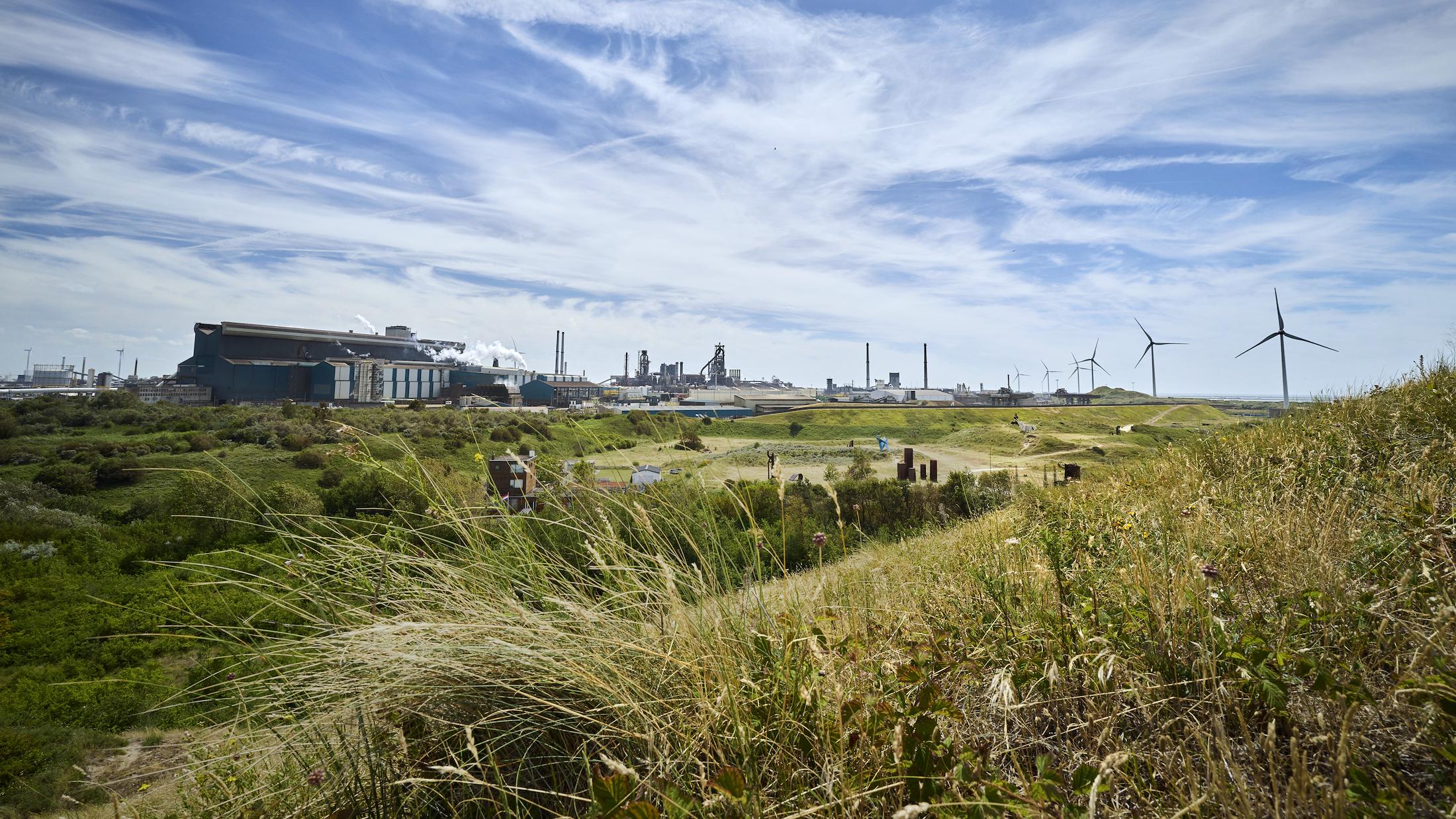
Steel production impacts biodiversity through raw material extraction in TSN’s value chain as well as through TSN’s own operations through nitrogen deposition in Natura 2000 areas, emission of pollutants and other ecological pressures associated with steel production.
Table. Summary of IROs, policies, key actions, metrics and targets related to biodiversity
|
Impacts, risks and opportunities |
Category |
Policies |
Key Actions |
Metrics |
Targets |
|---|---|---|---|---|---|
|
Pollution and climate change: TSN’s steelmaking operations may contribute to biodiversity loss through its emittance of air and water pollutants, and greenhouse gas. |
Actual negative impact |
Pollution Control Policy |
|
Pollution, |
No targets have been set for the current reporting period. |
|
Noise and light disturbances: TSN’s steelmaking operations may contribute to biodiversity loss through disturbances like noise and light. |
Potential negative impact |
|
Sites near biodiversity sensitive areas |
||
|
Upstream mining: Upstream activities in TSN’s value chain – such as mining of iron ore, coal, and non-ferrous metals – may contribute to biodiversity loss through multiple pressures, including freshwater and sea use changes, greenhouse gas emissions from extraction and transport, pollution of air, soil, and water, physical disturbances like noise and light, and large-scale abiotic resource extraction. These pressures may degrade natural habitats and disrupt land and water ecosystems, particularly in biodiversity-sensitive regions. |
Actual negative impact |
|
TSN will assess the option of developing entity-specific metrics. |
||
|
Warm-water discharge: TSN’s steelmaking operations may contribute to local biodiversity impact through its warm-water discharge within the legally allowed amounts and temperatures. |
Potential negative impact |
|
Impacts, risks and opportunities management
Biodiversity and ecosystems policies
Steelmaking is closely connected to the natural environment through its reliance on raw materials, energy, land, and water. From iron ore mining and coal extraction to logistics, processing, and site operations, the steel value chain interacts with ecosystems across multiple geographies. These interactions can result in both direct impacts, such as land disturbance, habitat fragmentation, and water use, and indirect impacts through air emissions, water discharges, and climate change. At the same time, the steel sector also has significant potential to lower its impact on biodiversity through responsible sourcing, site restoration, nature-based solutions, and the transition to lower-emission production routes.
Table. Policies related to biodiversity and ecosystems
|
Background |
Key Content |
Scope & key stakeholders |
|---|---|---|
|
|
|
While a transition plan has not yet been formally adopted, TSN started developing a new Biodiversity Policy in early 2026. This policy applies to all TSN operations, managed lands in the Netherlands and abroad and relevant value-chain activities, including suppliers and contractors where biodiversity impacts may occur. While TSN ensures full compliance with applicable nature and environmental legislation, including Natura 2000 obligations and the Dutch Omgevingswet, this regulatory framework forms the baseline for biodiversity management at site level. In addition, once adopted, TSN’s Biodiversity Policy sets out a proportionate and risk-based approach to identifying and managing biodiversity-related impacts across its operations and, where relevant, its value chain. This policy is intended to guide continuous improvement over time, taking into account operational, technical and regulatory constraints.
Beyond compliance, TSN works to progressively reduce key drivers of biodiversity impact, in particular pollution, greenhouse gas emissions, and reactive nitrogen emissions (especially NOx and ammonia) as these represent material pressures on biodiversity-sensitive areas locally and regionally. Lowering reactive nitrogen emissions is essential to reducing nitrogen deposition in Natura 2000 areas. These efforts are integrated with TSN’s broader decarbonisation and environmental strategy, in particular the Green Steel Project at TSIJ. Further information on the Green Steel Project is provided in the Climate change chapter.
When determining appropriate measures under TSN’s biodiversity management approach, once developed, the Avoid–Minimise–Restore–Offset (AMRO) mitigation hierarchy will be considered.
Implementation of the Biodiversity Policy is supported by internal standards, supplier requirements and stakeholder engagement with authorities, communities and knowledge partners. Progress is monitored through defined indicators with the aim of continuous improvement over time.
TSN’s approach focuses primarily on its own operations, where it has the greatest level of control and ability to influence outcomes. Engagement with suppliers is being further developed through existing and developing due diligence processes.
Biodiversity and ecosystems actions
Biodiversity and ecosystems current actions
TSN’s approach to biodiversity and ecosystems consists of two complementary layers. First, compliance with applicable nature permits and environmental legislation defines the operational baseline for site activities, including legally required mitigation measures related to nitrogen deposition and other environmental pressures. Second, TSN is developing a broader strategic approach in line with ESRS E4 and emerging TNFD guidance, aimed at identifying, assessing and managing biodiversity-related impacts, risks and opportunities over time. This strategic layer builds on, and does not replace or exceed, existing permit obligations.
Nothing in this section is intended to go beyond or conflict with existing permit obligations. Instead, it aims to provide transparency on how TSN understands and manages biodiversity-related impacts within and beyond its current regulatory framework.
Own operations
TSN recognises that its most significant biodiversity-related impact driver at the IJmuiden site is nitrogen deposition affecting nearby Natura 2000 areas, as regulated under the applicable nature permit. The permit defines required mitigation measures and conditions under which operations are allowed. The ESRS E4 disclosures and related TNFD-aligned work are intended to provide additional transparency and insight into biodiversity-related impacts and dependencies, and to support longer-term environmental performance improvements. These activities are complementary to and aligned with existing permit obligations.
Throughout the reporting period, TSN has implemented and continues to implement measures primarily aimed at reducing air emissions, including NOx emissions, greenhouse gas emissions and water emissions. These measures are driven by regulatory requirements, operational improvement programmes and the broader Green Steel Project, and are expected to contribute to reducing pressures on biodiversity over time. These actions are described in further detail in the Pollution and Climate change chapters.
TSN is currently developing a biodiversity transition approach in line with ESRS E4 and TNFD guidance. At the time of reporting, this work is ongoing and has not yet resulted in a formally adopted transition plan. The outcome of this process is expected to provide a structured framework for identifying key biodiversity-related impacts, prioritising actions and monitoring progress over time, taking into account regulatory requirements, technical feasibility and business context.
In addition, TSN is in the process of further developing its understanding of biodiversity-related impacts through TNFD-aligned assessments. Insights from these assessments are expected to inform the future development of site-level biodiversity management plans, where relevant and appropriate.
In parallel, TSN continues to work on updating its nature permit. TSN operates an integrated management system aligned with ISO 14001 and maintains internal codes of practice and technical standards that include land-use planning, habitat protection, and pollution prevention to minimise its impacts in its operational business.
TSN has concluded that no significant financial resources were allocated to the implementation of its key biodiversity-related actions in the reporting period.
Upstream value chain
TSN has embedded biodiversity-related expectations regarding land-use practices, ecosystem protection, and avoidance of high-risk activities into its Responsible Supply Chain Policy, Supplier Code of Conduct, and other OECD guidance aligned due-diligence procedures. TSN does not finance upstream projects; instead, it focuses on identifying biodiversity-related risks in its supply chain and influencing them through targeted supplier engagement, contractual expectations and follow-up actions where needed.
Biodiversity and ecosystem future actions
An overview of a non-exhaustive list of key future actions is provided in the table below.
Table. Key future actions related to biodiversity and ecosystems
|
Key Actions |
Scope and timeframe |
Expected outcome |
|
Replacement of Blast Furnace 7 and Coke and Gas Plant 2 through DRP-EAF |
IJmuiden site Green Steel Project phase 1 |
~10% NOx reduction |
|
Installation of double sound-insulated enclosure around EAF |
IJmuiden site, during construction of EAF (approximately 4 years) |
Reduction of noise levels well below maximum permitted noise levels |
|
Installation of additional damping around fans and chimneys at the EAF |
||
|
Installation of enclosures around various noise sources at the EAF |
||
|
Reduced cooling water use by DRP-EAF |
IJmuiden site, after commissioning of DRP-EAF |
~40% reduction of warm-water discharge and ~24% in winter |
The future actions described above depend on several external and operational preconditions that may affect TSN’s ability to implement them timely and as planned. These are further elaborated on in the Pollution chapter.
The future financial resources expected to be allocated for the implementation of key actions under the Green Steel Project Phase 1 are presented in the Climate change chapter.
Natura 2000 areas
As assessed in the Environmental Impact Assessment (MER) for the Green Steel Project, the transition at TSIJ from the existing coal‑based steelmaking route to the new DRI‑EAF route has been evaluated for its effects on NOx emissions and nitrogen deposition in nearby Natura 2000 areas. During the operational phase, this transition will result in a clear reduction in NOx emissions compared to the reference situation and, as a result, nitrogen deposition in nearby Natura 2000 areas is expected to generally decline. More specifically, when the DRI‑EAF installation operates on natural gas, nitrogen deposition is expected to decrease overall compared to the reference situation. However, in the Noordhollands Duinreservaat, a limited area of 3.31 ha is expected to experience an increase in nitrogen deposition, while the vast majority (260.48 ha) is expected to experience a decrease. A further decrease in nitrogen deposition is anticipated when the installation transitions from natural gas to hydrogen, further strengthening the long‑term environmental benefits.
During the construction period, the closures of Cokes and Gas Plant 2 and Blast Furnace 7 and the build‑out of the new DRI‑EAF installation will temporarily lead to higher NOx emissions. Consequently, temporary increases in nitrogen deposition are anticipated in several Natura 2000 areas located within 25 km of the IJmuiden site. For further details, refer to the MER report (link to web-site Milieu Effect Rapport (MER) | Tata Steel)
For each project phase, it will be assessed whether changes in nitrogen deposition in relevant Natura 2000 areas remain at 0.00 mol N/ha/year or lower. If an increase of 0.01 mol N/ha/year occurs on any hexagon within a Natura 2000 area, an ecological assessment will be carried out where required. This assessment may lead to mitigation measures to limit or fully eliminate the increase. TSN expects that any such increases can be addressed through internal rebalancing measures, including reductions in NOx emissions associated with the new DeNOx installation at the Pellet Plant.
Beyond NOx emissions, please refer to the Pollution chapter for information on additional future actions addressing other pollutants.
Noise
At TSIJ, during the construction and transition phase of the DRI-EAF, noise levels are expected to remain within the noise limits set in the current permits, although a temporary very limited increase, still within permitted noise limits, may occur at some locations during the transition phase. Additional measures ensure compliance with the permitted noise levels including, for example, limiting construction activities to daytime hours, use of modern equipment that complies with applicable noise standards during construction phase and enclosed or insulated transport systems, ducts and large silencers on stacks and exhaust systems during the transition phase. More about possible measures which are yet to be agreed as part of the Tailor-Made Agreement can be found in our Joint Letter of Intent.
In the operational phase, noise levels are expected to be lower than in the reference situation because the new installations are designed according to the Best Available Techniques (BAT) and are planned to be complemented by additional measures that go beyond legal requirements (BAT+ measures). For example, the EAF will be located in a double sound-insulated enclosure, fans and chimneys are fitted with additional damping, and various noise sources such as compressors and pumps will be located in specifically designed enclosures.
Light
At TSIJ, for the Green Steel Project, lighting will be required for roads, yards, work areas and buildings, including prominent warning lighting on the DRP structures (up to 147 m), but this is introduced in a context where the site already has high light emissions. Therefore, we have applied design principles to minimise incremental impacts, such as “no lighting unless necessary”, directing and dimming luminaires downward, using warm colour temperatures, and where possible lowering mast heights and shielding upward light.
Warm water discharge
At TSIJ, warm water discharged via Riool 100 and Riool 200 creates persistent surface-bound thermal plumes in the Hoogovenkanaal and Buitenspuikanaal, and although these waters are not ecologically sensitive, the plumes can still disrupt fish migration by creating alternative surface flow and temperature cues that divert fish from their normal routes and cause local thermal stress. These warm layers may also subtly alter habitat conditions by favouring heat-tolerant species, resulting in light ecological pressure despite the system’s overall resilience conditions.
The environmental impact study shows that the warm-water plume remains confined to the upper layer of the Hoogovenkanaal and Buitenspuikanaal and affects less than 25% of the water surface, meaning that most of the waterbody remains at normal temperatures while only a relatively small surface zone experiences elevated thermal conditions. The Green Steel Project project will substantially reduce thermal pollution by lowering both the volume of cooling water and the temperature of discharged water, with the new DRI and EAF installations requiring significantly less cooling water in the operational phase, leading to an approximately 40% decrease in warm-water discharge in summer and an approximately 24% decrease in winter, which in turn is expected to reduce the ecological influence of the warm-water plumes in the Hoogovenkanaal and Buitenspuikanaal.
Metrics and targets
Biodiversity and ecosystems targets
To minimise its impacts on biodiversity, TSN has set voluntary process-oriented objectives aimed at building the foundations for future quantitative biodiversity targets. In 2026, TSN plans to complete its voluntary, TNFD-aligned biodiversity risk and impact assessment for all its operational sites in the Netherlands, covering dependencies, pressures, impact drivers and affected ecosystems at site level.
In 2026, TSIJ intends to have translated these insights into site-level biodiversity management plans, which will operationalise TSN’s commitments, define priority actions, assign responsibilities, and establish monitoring indicators and review processes. For downstream sites, completion is expected in 2027.
In parallel, TSN will start to address upstream biodiversity impacts by identifying key suppliers operating in high-risk areas in order to better understand material biodiversity risks and impacts in the value chain and to identify where engagement, risk mitigation or collaborative action may be required.
Following completion of this preparatory work, TSN will assess the feasibility of setting quantitative biodiversity targets at site and value-chain level. At present, TSN does not rely on biodiversity offsets to meet its objectives, nor are offsets included in its current target-setting approach.
Table. Targets related to biodiversity and ecosystems
|
Target |
Target year |
Scope |
|
Completion of biodiversity risk assessment in line with TNFD |
2026 |
IJmuiden and potentially other operational sites in NL |
|
Development of biodiversity management plans |
2027 |
All TSN sites with medium or high biodiversity risks |
|
Supplier screening with regard to biodiversity impacts |
2026 |
Key suppliers in high-risk regions |
Biodiversity and ecosystems metrics
TSN has mapped all material sites located in proximity to biodiversity-sensitive areas, as presented in the table below. This mapping enables TSN to understand which biodiversity-sensitive areas could potentially be affected by its operations and therefore where further assessment and monitoring should be prioritised.
To gain a deeper understanding, TSN intends to conduct a LEAP assessment for the IJmuiden site in 2026. This assessment will help TSN identify the drivers of biodiversity change associated with its activities at a more granular level. In addition, further assessments are planned to better understand impact drivers from subsidiaries located in the Netherlands.
The IJmuiden site represents the location where most significant biodiversity-related impacts may arise. Under the applicable Nature Permit, TSN is required to implement mitigation measures to reduce nitrogen deposition and other pressures on nearby Natura 2000 areas. Reflecting recognised frameworks such as ENCORE and the TNFD Sector Guidance for Metals & Mining, TSN acknowledges that key impact drivers of biodiversity change for the steel sector include pollution and greenhouse gas emissions. As part of its Green Steel Project, TSN is implementing major measures to reduce GHG emissions and air emissions, including NOx emissions. These measures are expected to substantially lower TSN’s contribution to pollution-related pressures on biodiversity. Further details are provided in the Climate change (GHG emissions) and Pollution (pollutants) chapters.
Direct biodiversity outcome metrics (e.g. species abundance, habitat condition indices) are not yet measured. TSN is evaluating methodologies and data requirements to expand biodiversity-specific metrics in future reporting cycles, in alignment with ESRS E4 and emerging TNFD guidance.
Table. Sites near biodiversity-sensitive areas
|
Name and Type of biodiversity-sensitive areas affected |
Business activities negatively affecting biodiversity-sensitive areas |
|---|---|
|
Netherlands - TSIJ: Ijmuiden (Material IRO: Pollution / Nitrogen deposition) |
|
|
Natura 2000 sites:
Key Biodiversity Areas:
Buffer zone applied:
|
Physical Sources: These are the physical sources and technical controls for nitrogen oxide (NOx) emissions and other pollutants
Industrial Activities: These are the core production steps in steelmaking and finishing: Steps in turning raw steel into finished products.
Surface treatments for corrosion resistance and product quality.
|
|
Netherlands - Building Systems: Ijsselstein (Material IRO: Pollution, Climate Change and Noise & Light Disturbances) |
|
|
Natura 2000 sites:
Key Biodiversity Areas:
Buffer zone applied:
|
Industrial Activities:
|
|
Netherlands - Building Systems: Geldermalsen (Material IRO: Pollution, Climate Change and Noise & Light Disturbances) |
|
|
Natura 2000 sites:
Key Biodiversity Areas:
Buffer zone applied:
|
Industrial Activities:
|
|
Netherlands - Tubes: Zwijndrecht (Material IRO: Pollution, Climate Change and Noise & Light Disturbances) |
|
|
Natura 2000 sites:
Key Biodiversity Areas:
Buffer zone applied:
|
Industrial Activities:
|
|
Netherlands - Tubes: Oosterhout (Material IRO: Pollution, Climate Change and Noise & Light Disturbances) |
|
|
Natura 2000 sites:
Key Biodiversity Areas:
Buffer zone applied:
|
Industrial Activities:
|
|
Netherlands - Tubes: Maastricht (Material IRO: Pollution, Climate Change and Noise & Light Disturbances) |
|
|
Natura 2000 sites:
Key Biodiversity Areas:
Buffer zone applied:
|
Industrial Activities:
|
|
Netherlands - Distribution: Feijen / Multisteel (Material IRO: Pollution, Climate Change and Noise & Light Disturbances) |
|
|
Natura 2000 sites:
Key Biodiversity Areas:
Buffer zone applied:
|
Industrial Activities:
|
|
Europe (excluding Netherlands) |
|
|
Natura 2000 sites: 32 Key Biodiversity Areas: 5 |
Industrial Activities:
|
|
United States |
|
|
Natura 2000 sites: 0 Key Biodiversity Areas: 0 |
Industrial Activities:
|
Accounting policies for biodiversity metrics
Site selection methodology and data sources
To identify locations relevant for biodiversity-related disclosures, TSN applies a two-step materiality filter. First, the assessment focuses on legal entities with production activities, as these operations are considered environmentally relevant. Second, among these entities, TSN prioritises those located in the Netherlands, reflecting TSN’s commitment to reducing nitrogen deposition in Natura 2000 areas as part of the Green Steel Project at TSIJ.
For all environmentally relevant entities, TSN determines the proximity of operations to biodiversity-sensitive areas using buffer zones, following either IBAT recommendations or regulatory requirements. For the IJmuiden site, TSN applies the 25 km buffer zone established in its Nature Permit. For subsidiaries, TSN applies IBAT’s recommended 10 km buffer zone for production facilities which is considered likely to cover the impacts from most pressures. For warehouse and logistics sites with more limited operational footprints, a 5 km buffer zone is applied.
Within the proximity defined by each buffer zone, TSN identifies relevant biodiversity-sensitive areas, including Natura 2000 sites, Key Biodiversity Areas (KBAs) and UNESCO natural or mixed World Heritage sites. For non-NL EU locations and for US sites, the biodiversity-sensitive areas identified within these buffers are numerically aggregated for reporting clarity.
Estimation methodology, assumptions and limitations
TSN is currently developing a more granular understanding of its biodiversity impacts. As a first step, TSN relies on external frameworks such as ENCORE, which provide sector-specific guidance on material environmental pressures per ISIC group. For TSN, the relevant ISIC classification is the manufacture of basic iron and steel. Based on this, TSN has identified pollution, climate change, noise and light disturbance as pressures potentially associated with its activities. These pressures represent drivers of biodiversity change, meaning they are conditions that enable and influence biodiversity change.
The Nature Permit for the IJmuiden site identifies nitrogen deposition as a key pressure on Natura 2000 areas; related pollution metrics and reduction targets are disclosed in Pollution. Climate-related impacts are addressed through GHG emissions and targets disclosed in Climate Change.
For other identified pressures, TSN is still in the process of gathering site-specific data and developing appropriate metrics.